 (412) 607-8548

Best Tree Trimming Techniques for Health
Table of Contents
- Why Tree Trimming Matters for Tree Health
- Proper Tree Pruning Techniques: A Step-by-Step Guide
- Tree Pruning Cuts: Where and How to Cut
- When to Prune Trees: Timing by Season and Condition
- Tree Trimming Safety: Boundaries for DIY Work
- Species-Specific Pruning Guidance
- How Much Canopy to Remove and Young-Tree Structural Pruning
- Disease and Pest Sanitation After Pruning
- Frequently Asked Questions
Last Updated: October 19, 2026
Why Tree Trimming Matters for Tree Health
Tree trimming techniques involve the selective removal of branches to improve a tree's health, structure, and safety.
Here's the core tension most guides ignore: a tree does not heal, it seals. Every pruning cut is a permanent record the tree spends years walling off.
Good trimming delivers real benefits:
- Stronger structure and less chance of failure
- Better airflow and sunlight through the canopy
- Dead, diseased, and damaged branches removed before problems spread
The International Society of Arboriculture's pruning guidance frames it well: pruning is a wounding process, so every cut should have a reason.
Proper Tree Pruning Techniques: A Step-by-Step Guide
Good tree trimming techniques follow a fixed order: clean out dead wood first, fix structure second, and only then think about size. Skipping straight to size is the most common mistake we see.
Step 1: Remove Dead, Diseased, and Damaged Branches
Start with crown cleaning. Remove dead, diseased, and damaged branches before anything else.
Deadwood removal is the safest work you'll do. Dead branches are already a hazard, and cutting them reveals what's inside. Look for loose, cracked, or falling bark, no green under the bark when scratched, hollow or soft wood at the cut, and fungal growth near the branch base.
Diseased branches need one extra step: sterilize your pruning tools between cuts. More on that in the sanitation section.
Step 2: Improve Structure with Crown Thinning and Raising
Crown thinning removes selected branches to improve airflow and sunlight without changing overall shape; crown raising removes lower branches for clearance.
Thinning targets problem branches:
- Crossing or rubbing limbs
- Narrow, V-shaped forks with weak attachment
- Water sprouts growing straight up from the trunk
Remove lower branches gradually over several years rather than all at once, sudden loss stresses the trunk and can trigger suckering.
Step 3: Manage Canopy Size with Crown Reduction
Crown reduction shortens branches to reduce canopy size and branch weight. It is not topping: topping cuts back to stubs, and the tree answers with weak, fast regrowth that attaches poorly and breaks in storms. Crown reduction cuts back to a lateral branch large enough to become the new leader.
Use reduction when:
- A limb overhangs a roof or power line
- Branch weight threatens a weak fork
- The tree has outgrown its space
Tree Pruning Cuts: Where and How to Cut
The right cut sits just outside the branch collar, the swollen ridge where the branch meets the trunk. Cut there and the tree seals the wound on its own.
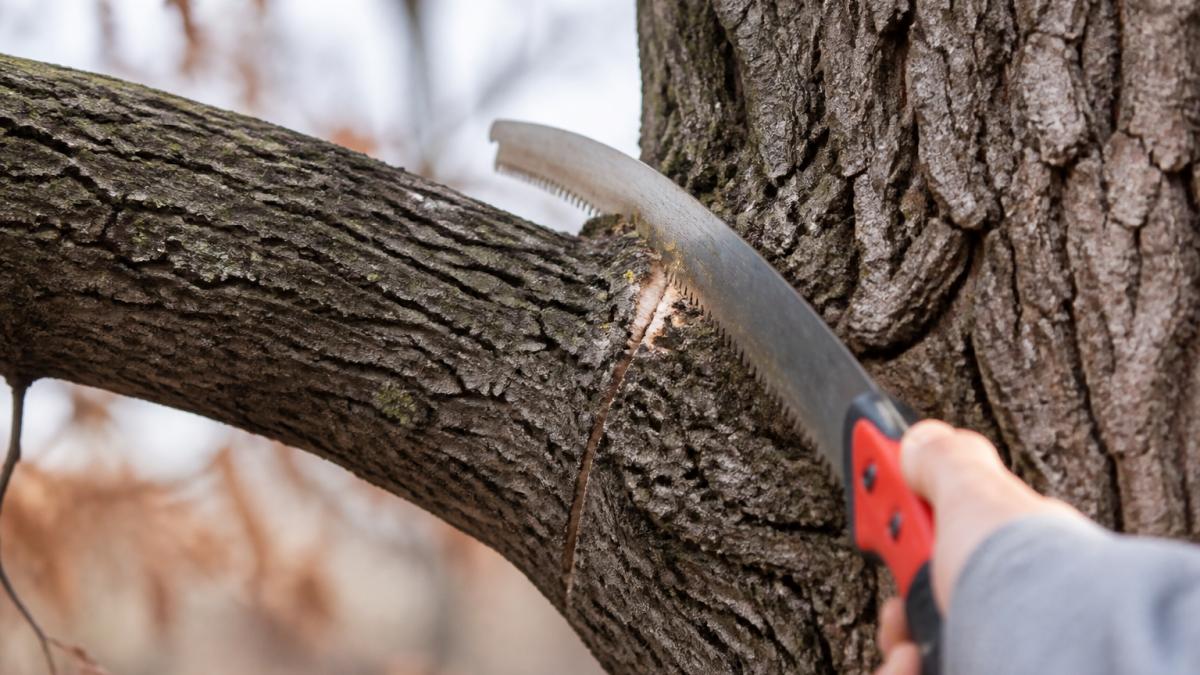
Find the branch collar before you cut
The branch collar is a visible ridge of swollen bark at the base of the branch, a raised ring or slight bulge where it meets the parent limb. The tissue inside that ridge is the tree's own seal, so your saw should stop at its outer edge, never inside it.
A simple field test: run your thumb along the underside of the branch toward the trunk. When the branch widens into the trunk, you've found the collar. Cut just outside it.
The three-cut method for branches too heavy to hold
Any branch large enough to tear bark when it falls needs three cuts, not one:
- Undercut about 6 inches out from the collar, cutting a third of the way through from the underside.
- Top cut slightly further out from the trunk than the undercut, cutting down until the branch drops.
- Final cut on the remaining stub, just outside the branch collar.
The undercut is the whole point. When the branch falls, its weight pulls bark down the trunk; the undercut stops that tear at the kerf instead of letting it peel a strip off the trunk.
For small branches you can support with one hand, a single cut just outside the collar is enough. The three-cut method exists for weight, not for every cut.
What flush cuts and stubs actually do
- Never leave a stub. A stub is wood beyond the collar with no live tissue to seal it. It dries, cracks, and rots back into the parent branch, and the decay often travels further than the stub itself.
- Never cut flush. A flush cut slices through the collar and removes the exact tissue the tree uses to wall off the wound. The cut looks tidy and the tree pays for it for years.
Match the tool to the cut
- Bypass pruners for branches up to about 1/2 inch.
- Loppers for branches up to about 1 1/2 inches.
- Pruning saw for anything larger, and for any cut where you need a clean, flat kerf outside the collar.
A dull blade crushes tissue instead of slicing it, slowing sealing. Sharpen or replace blades before a big job.
The USDA Forest Service guide to pruning cuts describes the same principle: the branch collar contains the tissue that seals the wound.
When to Prune Trees: Timing by Season and Condition
Late winter is the best time to prune most trees, while they're dormant: the tree isn't pushing growth, wounds seal faster in spring, and structure is easy to see without foliage.
| Season | Best For | Avoid |
|---|---|---|
| Late winter (dormant) | Most deciduous trees, structural pruning | Fresh cuts before a hard freeze |
| Early summer | Correcting growth after spring flush | Heavy thinning in drought |
| Fall | Removing dead or damaged limbs only | Wound-making cuts before winter |
| Any time | Dead, diseased, or storm-damaged branches | Major structural work in extreme heat |
A few species break the rule. Flowering trees are best pruned right after bloom so you don't cut off next year's flowers.
Storm damage overrides the calendar. If a limb is hanging over a roof or power line, it comes down now, not in January.
Tree Trimming Safety: Boundaries for DIY Work
Tree trimming safety starts with one honest question: is this job within your reach?
Stay on the ground for:
- Small branches you can reach with a pole pruner
- Limbs under roughly 5 cm in diameter
- Deadwood you can remove without a ladder
Call a professional arborist when:
- Any part of the work requires a chainsaw off the ground
- Branches overhang a roof, power line, or fence
- The tree leans, or shows cracks or decay at the base
Power lines are a hard stop. Never trim near a line, no matter how small the branch. That work belongs to the utility.
We carry licensing and insurance for a reason. If something goes wrong on your property, an uninsured crew leaves you holding the cost.
Species-Specific Pruning Guidance
Species-specific timing is where generic advice fails: the same cut that helps an oak can hurt a flowering cherry in the wrong month. Trees differ in when they move sap, set flower buds, and sprout from old wood.
Timing by growth habit
- Oaks: prune in late winter while dormant. Fresh oak wounds in spring attract beetles that carry oak wilt, a disease that can kill a mature tree in a single season. The dormant window closes before those insects are active.
- Maples and birches: prune in early summer. These species push heavy sap in late winter and early spring, so dormant cuts bleed. Bleeding is rarely fatal, but it weakens the tree and looks alarming. Early summer, after the sap run, avoids it.
- Flowering trees (cherry, crabapple, dogwood, magnolia): prune right after bloom. Flower buds for next year form on this year's growth, so dormant pruning cuts off the coming season's flowers. Prune within a few weeks of petal fall and the tree has time to set buds for next year.
Why the rule varies
The pattern behind these rules is simple: prune when the tree seals fastest and when you won't remove next year's flowers or invite a pest. Dormant pruning works for most deciduous trees because the tree isn't spending energy on growth and wounds seal as spring arrives. Exceptions are species that bleed, set buds on old wood, or attract pests to fresh wounds.
When you do not know the species
If you cannot identify the tree, don't guess at the timing, identify it first. A certified arborist can name the species and the right window in one visit, a small cost next to pruning a flowering tree in the wrong month or opening an oak to wilt.
How Much Canopy to Remove and Young-Tree Structural Pruning
Never remove more than about a quarter of the live canopy in a single year, the limit we work to, and it matters most on mature trees with less energy to spare.
Over-pruning causes real damage:
- The tree draws on stored reserves and weakens
- Sunscald burns bark suddenly exposed to direct sun
- Water sprouts explode from the trunk
- Growth slows for years
Young-tree structural pruning is the exception worth investing in early. On a young tree, remove:
- Competing leaders down to one central trunk
- Narrow, weak forks before they grow heavy
- Lower branches gradually, over several seasons
A little structural pruning in the first decade saves major corrective work later. It's the cheapest tree care you'll ever buy.
Disease and Pest Sanitation After Pruning
Sanitation after pruning is the step most homeowners skip, and it's the one that stops problems from spreading.
Clean your pruning tools between trees, and between cuts on a diseased tree:
- Wipe blades with rubbing alcohol or a household disinfectant
- Let the blade dry before the next cut
- Clean again before moving to a healthy tree
Then deal with the debris. Chip or bag diseased wood and remove it from the site.
Watch the tree for a few weeks after pruning. Discolored foliage, oozing wounds, or sudden dieback mean something is wrong. Call a professional before it spreads.
Frequently Asked Questions
What are the proper practices for pruning trees?
Proper tree pruning techniques start with removing dead, diseased, or damaged branches first, then thinning the crown for airflow and raising lower limbs for clearance. Always make clean cuts just outside the branch collar, never leave stubs, and remove no more than 25 percent of the canopy in a single season. For mature trees, especially those near roofs or power lines, a professional arborist can assess structure and safety before any cuts are made.
When is the best time to prune trees?
The best time to prune trees depends on species and condition. Most deciduous trees benefit from dormant-season pruning in late winter, before new growth starts. However, dead, diseased, or damaged branches can be removed any time of year. Avoid pruning right after bud break or during active growth. For species like oak, avoid pruning in spring when oak wilt risk is highest. Always check species-specific guidance before scheduling major pruning work.
How much of a tree can you safely prune at one time?
As a general rule, remove no more than 25 percent of the live canopy in a single pruning session. Over-pruning stresses the tree, reduces its ability to produce food, and can trigger excessive water sprouts. Young trees can often handle a bit more structural pruning, but mature trees should be pruned conservatively. If a tree needs major reduction, spread the work over two or three seasons to protect its health and lifespan.
Should I cut off dead tree branches?
Yes, dead branches should be removed promptly. Deadwood removal prevents limb breakage that can damage property or injure people, and it stops decay from spreading into healthy wood. Make the cut just outside the branch collar, leaving the collar intact to help the tree seal the wound. If a dead branch is large or high up, call a professional arborist for safe removal rather than risking a fall or property damage.


Get Your Free Quote
Join the 500+ homeowners who trust us with their tree services. Contact us to get a free quote for your project.


