 (412) 607-8548

How to Protect Your Lawn During Stump Grinding
Last Updated: November 2, 2026
Quick Summary
To protect lawn stump grinding work, clear the area, call 811 to mark buried utilities, and set up plywood barriers to block flying debris. Spread the machine's weight with plywood along the route, time the job for dry soil, and rake up wood chips promptly.
- Call 811 before grinding to have public utility lines marked; it is a free service in the United States.
- Lay plywood sheets along the entire route, overlapping seams so the machine's wheels do not catch an edge.
- Test soil moisture; if a handful holds together in a muddy ball, wait 24 to 48 hours after heavy rain.
- Do not till fresh grindings into the lawn, since fresh chips tie up nitrogen and can stunt new grass.
- Fill the stump hole with topsoil in layers, packing each lightly and leaving it slightly higher than the lawn.
Table of Contents
- What Stump Grinding Does to Your Lawn
- Clear the Work Area and Mark Underground Utilities
- Set Up Barriers to Contain Flying Debris
- Protect Turf From Equipment Weight and Access Routes
- Contain, Clean Up, and Handle the Wood Chips
- How to Fill the Stump Hole After Grinding
- Lawn Recovery Timeline and Growing Grass Over Stump Grindings
- Scheduling Your Stump Grinding and Getting a Quote
- Frequently Asked Questions
What Stump Grinding Does to Your Lawn
Stump grinding is one of the most useful services for a clean yard, but it can leave your lawn torn up if the job is not planned well, so learning how to protect lawn stump grinding work from the start matters.
Most lawn damage comes from three things: flying debris, heavy equipment rolling over the grass, and the hole left behind after the grind. Each one is easy to prevent with a little prep.
Here is what to watch for:
- Ruts and tire marks from the grinder and truck
- Bare patches where the wheel and debris hit the turf
- Chip piles that smother grass for weeks
The steps below show how to keep your lawn in good shape before, during, and after the grind.
Clear the Work Area and Mark Underground Utilities
Before the grinder arrives, clear everything from the work zone, since this is the first step in protect lawn stump grinding planning.
Next, find out what is buried. Call 811 before any digging or grinding (811 Before You Dig).
Watch out: A grinder hitting a buried line can cause an injury, a utility outage, or a costly repair (811 Before You Dig).
Mark anything you want to protect with flags or spray paint. This helps the operator avoid sprinkler heads, lawn lights, and garden edging.
Set Up Barriers to Contain Flying Debris
Grinders throw chips a long way. Without a barrier, they can land in flower beds, on windows, and across the lawn. Plywood sheets, heavy tarps, or snow fence panels all work well as shields.
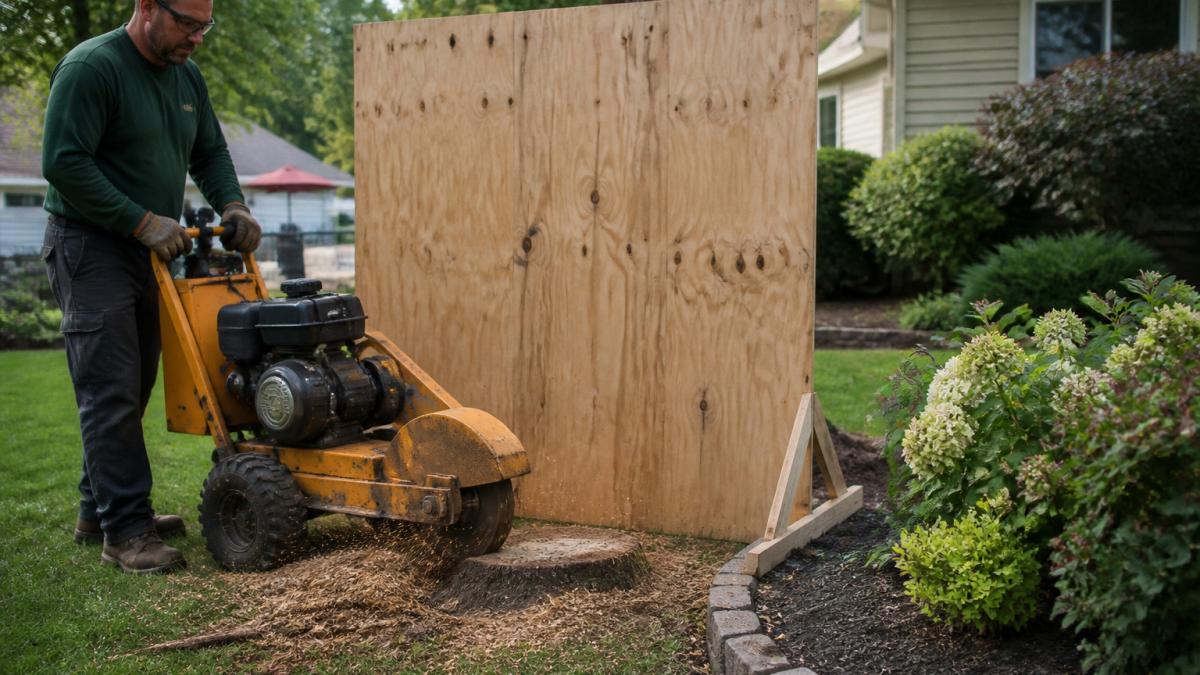
Place barriers between the stump and anything you want to keep clean:
- Stand a sheet of plywood on the side facing your garden or house.
- Anchor it with stakes or sandbags so it does not tip.
- Leave the open side toward the stump for the operator to work safely.
- Check that the barrier is tall enough to block debris at the height of the grinding wheel.
Chips still escape from the back and sides, so cover nearby plants with burlap or a tarp. Remove or cover any ornamental plants close to the stump.
Protect Turf From Equipment Weight and Access Routes
A stump grinder is not a lawn mower. Stump grinders are heavy machines, and much of their weight is concentrated on a small number of wheels or tracks. That concentrated load is what turns a soft lawn into a rutted mess. The fix is to spread the load, shorten the route, and pick the right day.
Stump Grinding - Controlling Flying Debris
Triad Dirt Works LLC.
Understand ground pressure before the machine arrives
Ground pressure is weight divided by the area touching the soil. A heavy grinder on narrow wheels concentrates its weight onto a small area of turf, which healthy lawn soil can struggle to bear when it is wet. Dry, firm soil with established roots can handle a single pass; saturated soil cannot.
Choose and stage ground protection
Match the protection to the machine and the soil:
-
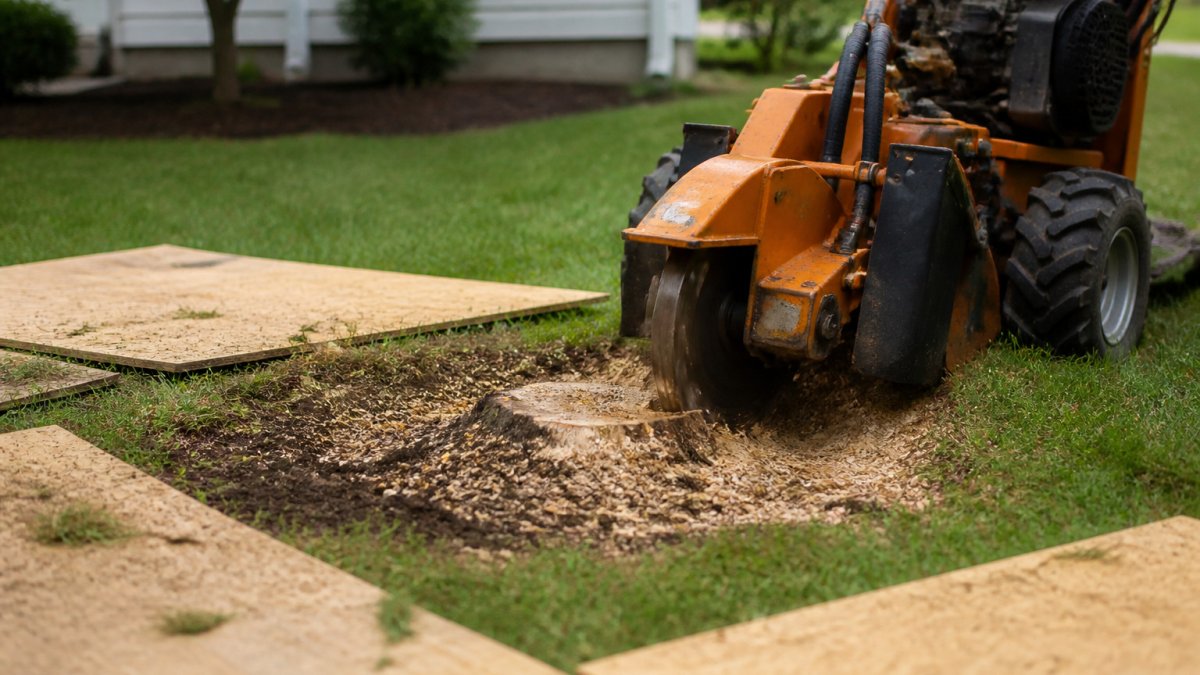
Plywood sheets are a common choice for walk-behind grinders. Lay them end to end along the route and overlap the seams so wheels do not catch an edge.
-
Alternate access routes beat any mat. A driveway, gravel path, or mulched bed edge that leads within reach of the stump saves the turf entirely. Measure the gate and path width first, a grinder that cannot fit through a 36-inch gate will not use that route no matter how good the mat is.
Plan the route and agree on it before the crew starts
Walk the yard with the operator or scheduler and mark the intended path with flags or spray paint. Confirm three things in writing or in the quote: the entry point, the path across the lawn, and where the truck and trailer will park.
Watch out: A grinder that sinks into soft ground can get stuck, and freeing it often does more turf damage than the grinding itself. If the soil is saturated, reschedule rather than risk it.
Time the job to soil conditions
Soil moisture matters more than the calendar. Test a handful of soil before the crew arrives: if it holds together in a muddy ball or water squeezes out, the ground is too wet. Wait 24 to 48 hours after heavy rain, and avoid scheduling during spring thaw or after irrigation cycles. Dry, firm ground in late summer and early fall is the easiest on turf.
Protect the route, not just the stump area
Lay protection along the entire path, not only around the stump. Ruts usually appear at turns, at the trailer ramp, and where the machine first leaves hard surface. Put down plywood at those transition points first. After the job, fill any ruts with topsoil and tamp them lightly so the lawn does not settle unevenly later.
Key tactics for keeping turf intact during the grind, drawn from the steps above.
| Protection tactic | Best for | Key point |
|---|---|---|
| Plywood sheets along route | Walk-behind grinders | Overlap seams so wheels avoid edges |
| Alternate access path | Narrow or soft lawns | Avoids turf entirely; measure gate width |
| Walk and mark route | Planning the entry | Confirm entry, path, and parking in writing |
| Test soil moisture | Timing the job | Muddy ball or squeezed water means too wet |
| Wait after heavy rain | Saturated ground | Wait 24 to 48 hours before grinding |
| Fill ruts with topsoil | Post-job repair | Tamp lightly so the lawn settles evenly |
Contain, Clean Up, and Handle the Wood Chips
A stump grind produces far more debris than most homeowners expect. A stump grind produces a considerable volume of chips and soil, often more than homeowners expect. Plan containment and cleanup before the wheel ever touches wood, or that debris ends up smothering turf and staining hardscape.
Shield nearby turf and beds before grinding
Containment starts with barriers, not rakes. Set up protection on the sides where chips will fly:
- Plywood or heavy tarps between the stump and flower beds, windows, and the lawn you want to keep clean.
- Burlap or breathable covers over ornamental plants and shrubs within the throw zone. Plastic sheeting can cook plants in sun; burlap lets them breathe.
- A defined chip zone. Ask the operator to direct discharge toward a tarp or bare area rather than across the lawn. A tarp laid flat on the grass on the discharge side catches most of the chips and makes collection far easier.
Separate grindings from turf as you collect
Grindings are a mix of wood chips, shredded roots, and soil. They are not the same as clean mulch, and they should not be left in a layer on the lawn. Collect them in this order:
- Rake the bulk into piles with a stiff garden rake while the chips are still dry. Wet chips mat down and are harder to lift.
- Blow the fines off the turf with a leaf blower on low speed. High speed drives debris into the soil and scatters it onto hardscape.
- Bag or tarp the collected material. Contractor bags work for small jobs; a tarp dragged to a wheelbarrow or truck bed is faster for large volumes.
- Inspect the turf for a thin layer of fines and rake again if needed. Even a quarter-inch layer can smother grass if left in place.
Watch out: Do not till fresh grindings into the lawn soil. Fresh wood chips tie up nitrogen as they decompose and can stunt new grass. Keep them out of the root zone or compost them first.
Decide what to do with the grindings
You have three practical options, and the right one depends on volume and your plans:
- Haul it away. Best for large volumes or when you do not have a use for the material. Confirm before the job whether cleanup and hauling are included in the quote, many companies charge separately for debris removal.
- Reuse as mulch. Fresh grindings work as a coarse mulch in shrub beds or around trees, but age them for a few months or mix them with finished compost first. Do not use them as a topdressing on the lawn.
- Compost. Pile grindings in a corner of the yard, keep them moist, and turn them occasionally. They break down over a season or two into a usable soil amendment.
Clean hardscape and drains
Chips and fines collect in gutter lines, patio joints, and storm drains. Sweep or blow hardscape after the job, and check any nearby drain grates before the next rain. A clogged drain can back water onto the lawn and undo the turf protection you set up.
Confirm cleanup scope in the quote
Cleanup is the most commonly underestimated line item in a stump-grinding quote. Ask specifically which services the price includes, such as raking, hauling, and hole filling. If you plan to handle debris yourself, tell the crew to leave the chips in a defined pile rather than spread across the lawn.
How to Fill the Stump Hole After Grinding
Once the stump is ground down, you are left with a hole full of loose chips and soil. Fill it right away so the ground does not sink or hold water.
Follow these steps:
- Remove the loose wood chips from the hole.
- Fill the hole with topsoil in layers, packing each layer lightly.
- Leave the soil a little higher than the surrounding lawn to allow for settling.
- Water the new soil and check it again after a few days.
Many people mix some chips into the bottom of the hole, but this can slow down settling and rot. Using clean soil is the safer choice for a lawn.
Lawn Recovery Timeline and Growing Grass Over Stump Grindings
Give the area time to heal. Expect the first signs of new growth within a few weeks, though full recovery can take a full growing season.
A typical recovery looks like this:
- Week 1: Clean up debris and fill the hole with soil
- Weeks 2-4: Seed the area and keep the soil moist
- Months 2-3: Mow lightly once the grass is about three inches tall
If you plant grass over old grindings, cover the seed with a thin layer of straw. This helps hold moisture and keeps birds from eating the seed. Water lightly and often until the seedlings are established.
Scheduling Your Stump Grinding and Getting a Quote
Planning ahead helps your lawn come through the job in good shape. Check the weather, clear the work area, and call ahead to confirm access to the yard.
Pricing depends on the size and depth of the stump and how hard it is to reach.
To get started, request a free quote for your stump grinding project. If you have a lot of debris to clear, you can also learn more about our tree debris hauling service and how we handle chips and brush. For a closer look at the work, visit our stump grinding page in Penn Hills to see what the job involves and how we protect the property around the stump.
Our team is family owned, licensed, and insured, and we do not use subcontractors. You will speak directly with the crew doing the work.
Frequently Asked Questions
How do you prepare your lawn for professional stump grinding?
Start by clearing the area of toys, planters, and loose objects, and mark the locations of underground utilities such as water lines, electric lines, and septic tank or field lines before the crew arrives. Mow the grass short and keep a clear path from the driveway or street to the stump so the grinder can be moved without tearing up turf. Let the crew know which areas of the lawn are most valuable, such as sod you recently laid or a garden bed you want to keep. Good preparation shortens the job and reduces the chance of ruts, mud, and damaged grass.
Will heavy stump grinding equipment leave ruts in my yard?
Stump grinders are heavy, and wet or soft soil is the most common cause of ruts and compaction. Grinding on dry ground, laying down plywood sheets along the travel path, and keeping the machine on the same route whenever possible all reduce ground pressure. Ask the crew how they plan to access the stump before work starts. If the lawn is already saturated after rain, it is often better to reschedule than to accept deep tire or track marks.
What should I do with the wood chips left after stump grinding?
Wood chips can be raked and used as mulch in planting beds, or they can be hauled away if you prefer a clean lawn. Spreading a thin layer on bare soil helps hold moisture, but a thick pile will smother grass, so keep the layer shallow where you want turf to return. Chips left in place around the stump area should be raked out before you seed or lay sod. Discuss cleanup scope with your provider when you schedule the job so you know what is included.
How long does it take for grass to grow back over a stump grinding site?
Recovery depends on soil condition, season, and how much of the grinding debris is removed. Once the hole is filled and graded, new grass seed commonly takes a few weeks to germinate and several months to establish a dense cover. Water the area lightly and regularly during establishment, and keep foot traffic and mowing off the patch until the new grass is well rooted.


Get Your Free Quote
Join the 500+ homeowners who trust us with their tree services. Contact us to get a free quote for your project.


