 (412) 607-8548

7 Tree Trimming Services for Commercial Property
Last Updated: November 5, 2026
Quick Summary
Tree trimming services for commercial property are planned pruning programs that keep trees structurally sound, protect people and buildings, and satisfy inspection expectations. Treat commercial trimming as risk management first and landscaping second, since a dead limb over a sidewalk is a liability claim waiting to happen.
- Planned structural pruning is typically scheduled annually to every 3 years at low risk.
- Clearance trimming keeps eight feet of clearance over walkways and is needed once or twice a year.
- A 2026 pricing guide lists full-property tree maintenance at $2,500 to $5,500.
- Late winter or early dormancy is commonly considered a good time to trim many species.
- Verify a contractor's license and insurance, and ask who will actually be on site.
Table of Contents
- Why Commercial Tree Trimming Protects More Than Curb Appeal
- 7 Tree Trimming Services for Commercial Property Compared
- What a Commercial Tree Maintenance Plan Should Include
- What Drives Commercial Tree Trimming Cost
- The Best Time of Year to Trim Trees on a Commercial Site
- What to Look for in a Commercial Tree Trimming Company
- Book a Free Commercial Property Assessment
- Frequently Asked Questions
Why Commercial Tree Trimming Protects More Than Curb Appeal
The U.S. tree trimming services industry is estimated at $26.0 billion in 2026, according to IBISWorld's tree trimming industry analysis, and a growing share of that work sits on commercial grounds. Tree trimming services for commercial property are planned pruning programs that keep trees structurally sound, protect people and buildings, and satisfy the inspection expectations that come with managing a site. Commercial trimming is best treated as risk management first and landscaping second. A dead limb over a sidewalk is a liability claim waiting to happen.
Liability, Sightlines, and the Cost of Deferred Pruning
Deferred pruning is the most expensive habit in commercial tree care. Limbs that go untrimmed for a few seasons grow heavier, crack at the collar, and drop without warning. On a commercial site, that means three problems at once: injury exposure, blocked sightlines for drivers and pedestrians, and damage to roofs, signs, and lighting. U.S. Forest Service research on urban tree establishment found that maintenance practices and site characteristics both contribute to whether trees survive and perform, which is why a written schedule beats reactive calls.
7 Tree Trimming Services for Commercial Property Compared
Commercial tree work is not one service. It splits into several categories, each with a different purpose, risk level, and scheduling rhythm. Here is how they compare before we break down the main three.
| Service | Primary Purpose | Typical Frequency | Risk Level |
|---|---|---|---|
| Planned structural pruning | Tree health and form | Annual to every 3 years | Low |
| Hazard and storm response | Remove imminent danger | As needed, same-day | High |
| Clearance trimming | Protect signs, lights, walkways | 1-2 times per year | Moderate |
| Deadwood removal | Reduce drop risk | Annual inspection | Moderate |
| Crown thinning | Wind and snow load reduction | Every 2-3 years | Moderate |
| Canopy raising | Vehicle and pedestrian clearance | Every 3-5 years | Low |
| Brush and understory clearing | Access and visibility | Seasonal | Low |
Planned Pruning and Structural Trimming
Planned pruning is the backbone of commercial tree maintenance. Planned pruning is generally intended to improve tree structure, eliminate safety hazards, and preserve visibility around signs and walkways.
Hazard and Storm-Response Trimming
Hazard trimming happens when a limb or tree has already failed or is about to. Hanging limbs, split leaders, and leaning trunks over parking areas need a crew on site fast, and often a bucket truck and rigging. This is not work for a groundskeeper with a pole saw. If a storm has left damage on your site, our emergency tree service in Penn Hills handles fallen trees and hanging limbs quickly.
Clearance Trimming Around Signs, Lighting, and Walkways
Clearance trimming keeps branches off the things people rely on. That means eight feet of clearance over walkways, unobstructed sightlines at entrances, and light fixtures that actually illuminate instead of sitting inside a canopy. Most sites need this once or twice a year. For the trimming work itself, see our professional tree trimming in Penn Hills page.
What a Commercial Tree Maintenance Plan Should Include
A commercial tree maintenance plan is a written schedule that maps every tree on the property to a service, a season, and an inspection interval. The plan should also name who inspects, how often, and what triggers an emergency call.
What Drives Commercial Tree Trimming Cost
Commercial tree trimming cost depends on tree size and species, access, crew size, equipment needs, and how often you schedule. A single tree beside a loading dock is a different job from a row of mature oaks over a parking structure. Published ranges vary widely: a 2026 pricing guide lists full-property tree maintenance at $2,500 to $5,500 and commercial or municipal contracts at $5,000 to $50,000, per TreeGuard Insurance's tree service pricing guide. Treat those as broad benchmarks, not quotes.
How to Use a Tree Trimming Cost Calculator
A tree trimming cost calculator is a tool that estimates a job by multiplying crew hours by an hourly rate, then adding disposal and equipment fees. To use one fairly, get quotes on the same basis. Hourly pricing favors small, unpredictable jobs; per-tree pricing favors planned work with a clear scope. Ask each contractor which model they used. For a deeper breakdown of how the two compare, read our guide to tree trimming cost per hour vs per tree.
The Best Time of Year to Trim Trees on a Commercial Site
Late winter or early dormancy is commonly considered a good time to trim many species, when growth is paused. Exceptions matter: flowering trees are pruned after bloom, and storm damage is handled whenever it happens.
What to Look for in a Commercial Tree Trimming Company
Look for three things: a license you can verify, insurance that covers your property, and a crew that shows up as promised. OSHA's inspection guidance for tree care operations notes that covered line-clearance trimming carries specific medical-services requirements, which tells you how seriously this trade treats safety. Ask who will actually be on site. Our crew is our own, never subcontracted, and we are licensed and insured. For a full checklist on vetting a contractor, read how to hire a licensed insured tree service.
Book a Free Commercial Property Assessment
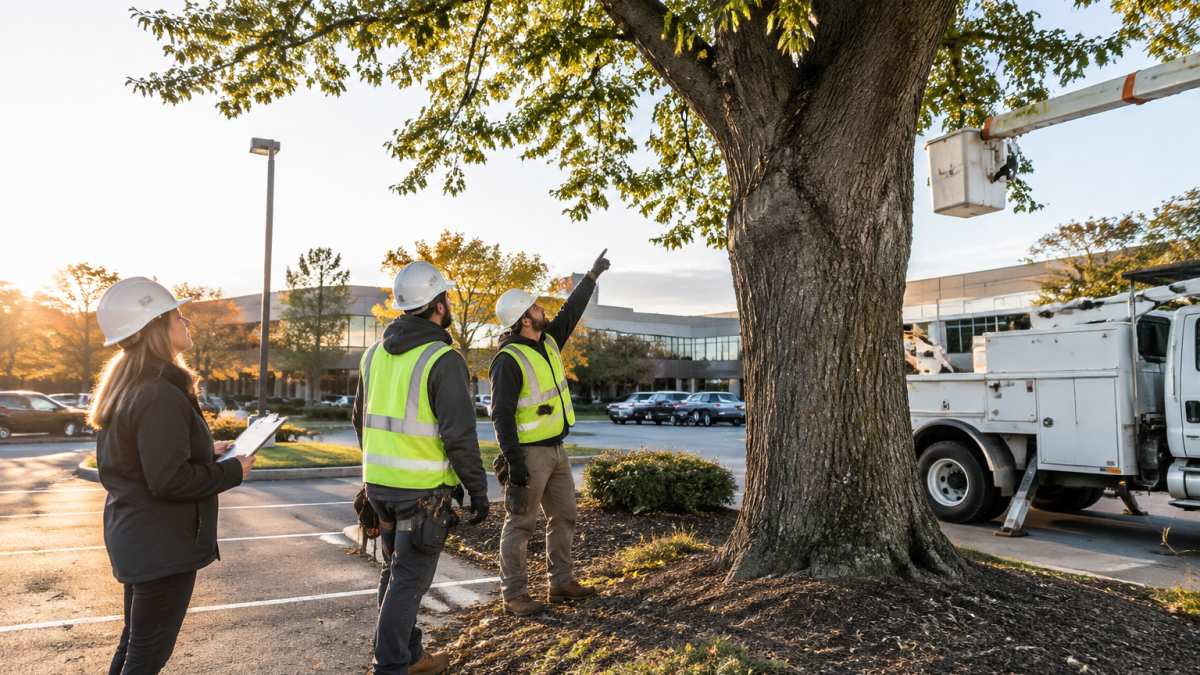
The simplest next step is a walk-through. We will inventory your trees, flag hazards, and outline a trimming schedule that fits your budget and your busy season. You talk directly with the crew doing the work. Get a free quote for your service and we will put a plan on paper.
Frequently Asked Questions
What tree trimming services do commercial properties need?
Most commercial sites need a mix of planned structural pruning, clearance trimming around signs, lighting, and walkways, hazard removal of dead or leaning limbs, and storm response. Properties with wooded acreage also need brush clearing and routine tree maintenance visits. The right mix depends on tree species, site layout, and how much foot and vehicle traffic passes beneath the canopy, so an on-site walkthrough is the practical starting point.
How much does commercial tree trimming cost?
There is no single rate. Pricing varies widely with scope and duration. Commercial tree trimming cost depends on tree count and size, access, equipment needs, disposal, and whether you buy one-time work or a recurring plan. Ask for an itemized quote so you can see what each line covers.
What is the best time of year to trim trees?
Late winter, while trees are dormant, is commonly considered a good window for structural pruning. Flowering species are usually pruned right after bloom. The months to avoid are the active growth flush and periods when pests or fungi spread easily. Dead, broken, or storm-damaged limbs are the exception: remove them whenever they pose a hazard, regardless of season.
How often should trees on commercial property be trimmed?
Many commercial grounds benefit from periodic structural pruning and clearance trimming where trees overhang walkways, signs, or lighting. Fast-growing species and heavily trafficked sites may need more frequent visits. A maintenance plan that includes an annual inspection catches hazards early and keeps small problems from turning into emergency removals.
Can regular tree trimming reduce property damage risks?
Yes. Removing dead, cracked, and weakly attached limbs before storms is the core of hazard reduction, and keeping clearance from roofs, power lines, and structures limits the damage a falling limb can do. Documented trimming schedules can help property managers keep a record of their maintenance practices.
Your trees are either an asset or a liability, and the difference is maintenance. Hilltop Tree Services LLC brings 15 years of experience, a licensed and insured crew, and no subcontractors to every commercial site. Get started with Hilltop Tree Services LLC and put a trimming schedule in place before the next storm does it for you.


Get Your Free Quote
Join the 500+ homeowners who trust us with their tree services. Contact us to get a free quote for your project.


