 (412) 607-8548

5 Steps to Get Your Free Tree Assessment Quote
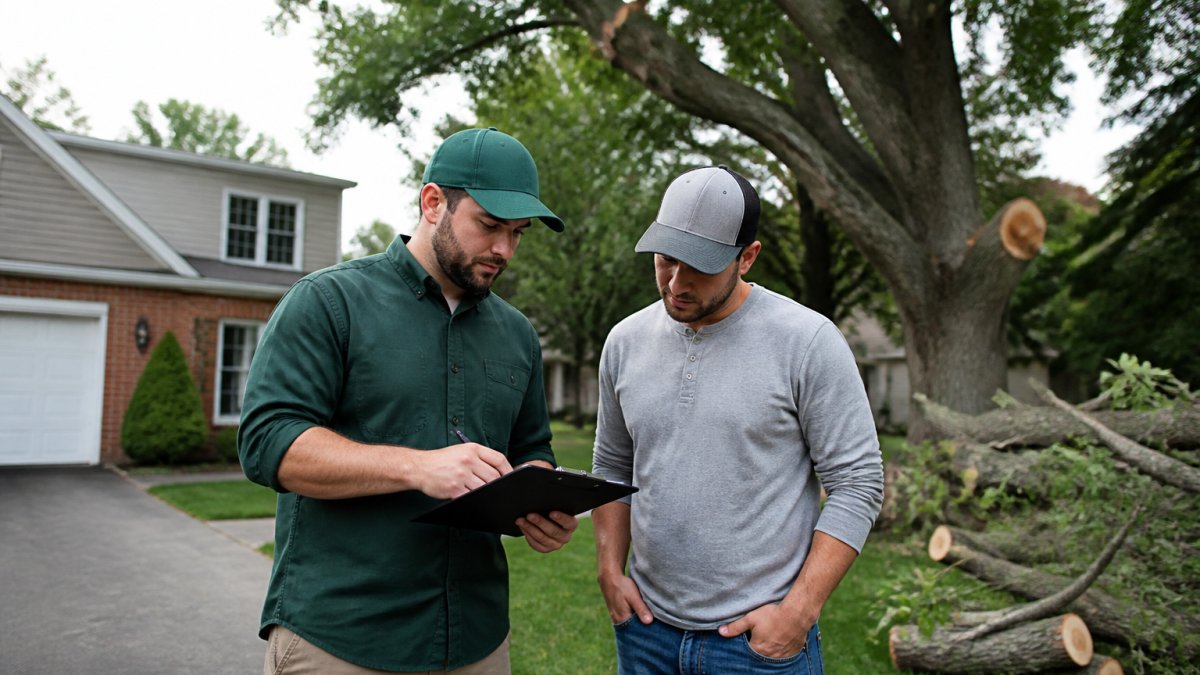
Last Updated: October 25, 2026
Quick Summary
A free tree assessment quote is the foundation of any smart tree-care decision that helps you understand what your trees need, whether removal, trimming, stump grinding, or monitoring, without the cost of a formal arborist report. Contact a licensed, insured tree service, schedule an on-site visit, and ask specific questions about credentials, scope of work, and pricing to get an accurate estimate.
- A basic visual tree check costs up to $100 and is sometimes free, while a full arborist report averages $350-$550.
- Provide details upfront: number of trees, approximate height and trunk diameter, location, and what work you need done.
- During the assessment, expect the arborist to inspect tree health, structure, defects, targets, and measure height and trunk diameter.
- Verify the company is licensed, insured, and ask whether they are a certified arborist through the International Society of Arboriculture directory.
- Compare multiple quotes on total scope including stump grinding, debris hauling, and cleanup, not price alone.
Table of Contents
- Why You Need a Free Tree Assessment Quote Before Any Work Begins
- Gather Information for Your Free Tree Removal Estimate Request
- Step-by-Step: How to Request Your Free Tree Assessment Quote
- What Happens During Your Tree Assessment and On-Site Visit
- Essential Questions to Ask a Tree Service During Your Estimate
- Tree Removal Quote Checklist: What to Review Before Accepting
- Getting Your Free Tree Removal Estimate: Next Steps
- Frequently Asked Questions
Why You Need a Free Tree Assessment Quote Before Any Work Begins
A free tree assessment quote is the foundation of any smart tree-care decision. It's not just about getting a price, it's about understanding what you're dealing with.
The difference between a basic visual check and a thorough assessment matters. According to Angi's 2026 tree-inspection cost guidance, a basic visual tree check can cost up to $100 and is sometimes offered for free, while a full arborist report averages $350-$550.
Here's why a free tree assessment quote is essential: dead, leaning, and storm-damaged trees don't announce themselves. A professional assessment tells you exactly what needs to happen, removal, trimming, stump grinding, or monitoring. Expert tree removal in Penn Hills starts with understanding what you're working with.
Without this step, you're making decisions blind, accepting the first quote, missing hazards, or overpaying for unneeded work. A free tree assessment quote gives you clarity, options, and confidence.
Gather Information for Your Free Tree Removal Estimate Request
Before you contact a tree service, collect the details they'll need for an accurate estimate.
Start with the basics: How many trees need attention? What's their approximate height and trunk diameter?
Also note any previous work done on the tree.
Finally, clarify what you want done: removal, trimming, stump grinding, or all three? Debris hauled away or chipped on-site?
Step-by-Step: How to Request Your Free Tree Assessment Quote
Getting a free tree assessment quote is straightforward. Follow these steps to make the process smooth and get an accurate estimate.
Contact the Tree Service
Start by reaching out to a licensed, insured tree service in your area by phone, email, or online form. Be clear: you're requesting a free tree assessment quote and an on-site visit.
Provide the basic details you gathered earlier: number of trees, approximate size, what needs to be done, and any urgency. If a tree is dead, leaning dangerously, or damaged by a storm, mention that upfront.
Ask whether their free estimate includes a visual assessment or a full written report. That distinction matters. Tree care professionals distinguish between basic visual checks and formal arborist assessments, according to USDA Forest Service guidance on tree-risk management.
Schedule Your On-Site Visit
Once you've contacted the service, they'll schedule an on-site assessment, the heart of the free tree assessment quote process.
Most services can schedule within a few days; for emergencies like storm damage or a tree leaning toward your house, many offer same-day or next-day visits.
Confirm the appointment a day or two before. Ask how long the assessment typically takes, usually 30 minutes to an hour, depending on the number and complexity of trees.
Prepare Your Property for the Assessment
Clear the area around the trees so the arborist can see the full trunk, branches, and root system.
Mark any hazards: power lines, underground utilities, septic systems, or areas where the crew would need to work carefully.
Have your property records handy: how long the trees have been there, prior pruning, and any disease or pest issues.
What Happens During Your Tree Assessment and On-Site Visit
A free assessment is not a sales pitch with a clipboard. The arborist's job is to gather enough evidence to price the work accurately and tell you whether the tree is a hazard, a maintenance item, or fine as-is.
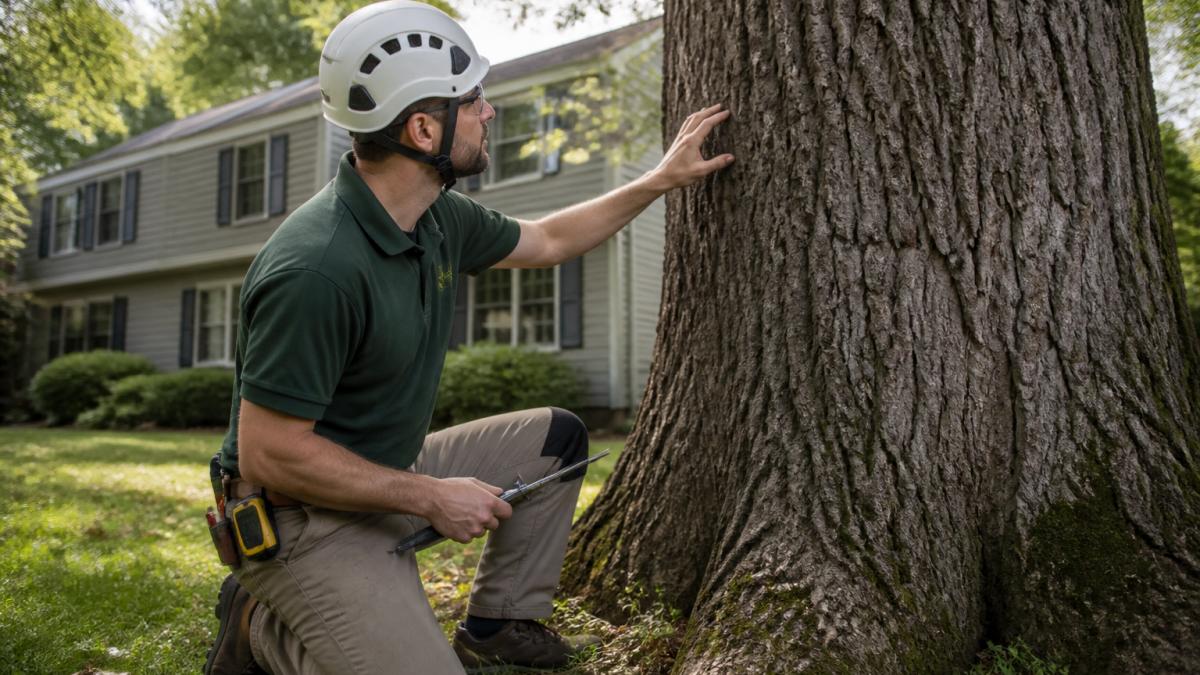
Tree health and condition
The arborist inspects the canopy for dieback, thinning, discoloration, and deadwood; the trunk for cracks, cavities, conks, and bark damage; and the root flare for girdling roots, decay, and soil heaving. Species matters too: a silver maple and a live oak carry very different failure profiles.
Structure and defect
This is where a real assessment earns its keep. The arborist looks for co-dominant stems with included bark, weak branch unions, heavy end weight, lean, and unhealed pruning wounds, noting whether defects sit in the lower trunk, crown, or root plate. A cavity over a lawn is a maintenance note; the same cavity over a driveway is a hazard.
Targets and site conditions
A defect only matters if something is in the fall zone. The arborist identifies targets, house, garage, shed, fence, pool, driveway, sidewalk, utility lines, gathering areas, and reads the site: slope, soil, saturation, nearby construction, and equipment access. Access alone can change a quote by hundreds of dollars, so a good assessor walks the path a truck and chipper would take.
Measurements and documentation
Expect actual numbers: height, trunk diameter at breast height (DBH), canopy spread, and distance to structures. Many arborists photograph defects and note them in the file, and for a removal may mark the drop zone and debris staging area.
Risk rating and recommendation
A thorough assessment ends with a judgment, not just a price: low, moderate, or high risk, and a recommendation to prune, remove, monitor, or refer for a formal arborist report. The USDA Forest Service's tree-risk management guidance describes this as a tiered process, from a limited visual assessment to a detailed advanced assessment when defects warrant it. Ask which level you received.
By the end, you should be able to repeat back what they found, what your options are, and roughly what each option costs. If you cannot, ask them to walk you through it before they leave.
Essential Questions to Ask a Tree Service During Your Estimate
When the arborist presents their findings, ask specific questions to understand the work, verify credentials, and compare options across quotes.
Ask what they recommend and why.
Ask about credentials. According to the International Society of Arboriculture's Find an Arborist directory, the public can verify ISA-credentialed tree-care professionals through their official directory.
Ask about the scope of work. What exactly will they do? Will they haul debris away or chip it on-site?
Ask about timeline: when they can start, how long the work takes, and whether you need to be flexible.
Ask how they price their work. Understanding their pricing logic helps you evaluate whether the quote is fair. Learn how to hire a licensed insured tree service by asking the right questions upfront.
Tree Removal Quote Checklist: What to Review Before Accepting
A free assessment quote is only useful if you can compare it fairly. Two bids for the same tree can differ by thousands because one excludes stump grinding, debris hauling, or permits. Review each quote against the same categories before deciding.
Scope of work
Confirm which trees are included by location and size, not just count. Check whether the quote covers removal only or also pruning, stump grinding, and cleanup, and what happens to the wood. A quote that says "remove tree" without specifying debris handling is incomplete.
Exclusions and extras
Look for what is not included: stump grinding, root removal, permits, traffic control, crane rental, and lawn or driveway repair. Ask for the price of each excluded item so you can compare total project cost, not the headline number.
Cleanup standard
"Cleanup included" means different things. Ask whether they rake the work area, blow off the roof and gutters, and haul all brush. Get it in writing. Cleanup disputes are one of the most common reasons a final invoice exceeds the estimate.
Credentials and insurance
Verify the company's state contractor license where required, and ask for a certificate of insurance showing both general liability and workers' compensation. Call the insurer if you want to confirm the policy is active. The International Society of Arboriculture's Find an Arborist directory lets you confirm ISA credentials. A low bid from an uninsured crew is not a bargain if a worker is injured or your roof is damaged.
Pricing structure and change orders
Ask whether the price is firm or hourly, and what triggers a change order. Access difficulty, hidden decay, and additional trees are common reasons a final bill grows. A written change-order process protects both sides.
Timeline and scheduling
Confirm the start window, expected duration, and weather contingencies. Ask whether the crew will need to shut off power or block the driveway, and for how long.
Guarantees and liability
Ask what happens if the crew damages your fence, roof, or neighbor's property, and whether the company carries a written damage policy. Confirm how disputes are handled.
| Service Provider | Services Included | Exclusions | Total Price | Timeline | Licensed & Insured | Notes |
|---|---|---|---|---|---|---|
| Hilltop Tree Services LLC | Removal, stump grinding, cleanup | [Ask] | [Get quote] | [Ask] | Yes | Family-owned, no subcontractors |
| Company B | [Details] | [Details] | [Details] | [Details] | [Verify] | [Your notes] |
| Company C | [Details] | [Details] | [Details] | [Details] | [Verify] | [Your notes] |
If a bid is far below the others, ask what it excludes. If it is far above, ask what it includes that the others do not.
Getting Your Free Tree Removal Estimate: Next Steps
You now have the tools to request a free tree assessment quote and evaluate it properly. The next move is to act: contact a licensed, insured tree service, gather your property details, and schedule that on-site assessment.
The difference between a rushed decision and a confident one is that free assessment. It costs nothing and takes an hour. Get a free quote for your service from Hilltop Tree Services LLC, and let's show you exactly what your trees need.
Frequently Asked Questions
What information do I need to provide when requesting a free tree assessment quote?
Have ready: the number and type of trees needing work, their approximate height and location on your property, any visible damage or hazards, and site access details (driveway width, overhead power lines, proximity to structures). Photos taken from different angles help the arborist understand the scope before the on-site visit. This information speeds up your free tree assessment quote and ensures the estimate is accurate.
How long does a free tree assessment take?
A basic visual tree assessment typically takes 30 minutes to an hour, depending on the number of trees and complexity of the work. The arborist will inspect each tree for health, hazards, and structural concerns, measure heights and reach, and evaluate site access. Bring the homeowner or property manager along so the crew can discuss findings and answer questions in real time.
Is a free tree assessment quote the same as a formal arborist report?
No. A free estimate is a visual inspection and cost proposal. A formal written arborist report with detailed analysis and recommendations averages $350-$550 and includes documentation you can use for insurance claims or property records. For routine tree removal or trimming, a free on-site assessment is sufficient; a full report is useful for complex situations, insurance disputes, or hazard documentation.
What should I ask about credentials and insurance during a tree service quote?
Ask for proof of licensing and current insurance (liability and workers' compensation). Request the arborist's credentials, look for ISA (International Society of Arboriculture) certification. Confirm the company uses its own crew and does not subcontract work. Ask what happens if property damage occurs during the job and whether the insurance covers it. Licensed, insured professionals protect both you and your property.
Getting a free tree assessment quote is the smartest first step. It protects your property, clarifies your options, and puts you in control of the decision. Don't wait until a hazard becomes an emergency. Reach out today.


Get Your Free Quote
Join the 500+ homeowners who trust us with their tree services. Contact us to get a free quote for your project.


