 (412) 607-8548

Clearing Brush and Dead Trees on Acreage: A Complete Guide
Last Updated: November 15, 2026
Quick Summary
Clearing brush and dead trees on acreage starts with a slow walk to map hazards, dead trees, and protected areas before any cutting begins. Professional land clearing typically runs $1,397 to $6,173 per acre, so match your method to vegetation density, tree diameter, slope, and disposal distance.
- Manual clearing suits light brush, saplings, and dead trees under about six inches in diameter.
- A skid steer with a forestry mulcher grinds vegetation in place, leaving no burn piles or hauling.
- If DIY rental and fuel costs land within about 30 percent of a contractor bid, the insured crew is usually better.
- Leave a vegetated buffer along creeks and keep roots in place on slopes to control erosion.
- Get two or three contractor bids for 5 to 20 acres of dense or hazardous brush.
Table of Contents
- Assessing Your Acreage Before You Cut a Single Branch
- How to Clear Land Without Heavy Equipment
- Clearing Land With a Skid Steer and Mulcher Attachments
- Handling Stumps and Woody Debris After the Cut
- Brush and Tree Debris Disposal: Burning, Chipping, or Hauling
- Land Clearing Cost Per Acre and the DIY vs. Pro Decision
- Protecting Soil, Water, and Wildlife While You Clear
- Getting a Crew Out to Walk Your Acreage
- Frequently Asked Questions
Assessing Your Acreage Before You Cut a Single Branch
Clearing brush and dead trees on acreage starts with a slow walk, not a chainsaw, when clearing brush on acreage. The most expensive mistakes happen in the first hour, when a landowner sizes up a wooded lot and underestimates what is standing in it.
The stakes are real. According to Angi's land-clearing cost estimates, professional land clearing typically runs $1,397 to $6,173 per acre, with a national average near $3,778.
Walk the Property and Map the Hazards
Walk the boundary first, then cut inward in strips. Note dead trees, leaning trunks, widow-makers caught in canopies, and anything within falling distance of a roof, fence, driveway, or power line. Flag hidden boulders, old stumps, and creek beds before equipment arrives, because a mower deck or mulcher head finds them at full speed.
Permits, Protected Trees, and Wetlands
Check with your municipality before cutting anything near a wetland, stream, or property line. Many wooded lots carry restrictions on removing mature trees or altering drainage, and burning debris usually requires a permit and clear weather rules. A five-minute call to the local code office saves a fine later.
How to Clear Land Without Heavy Equipment
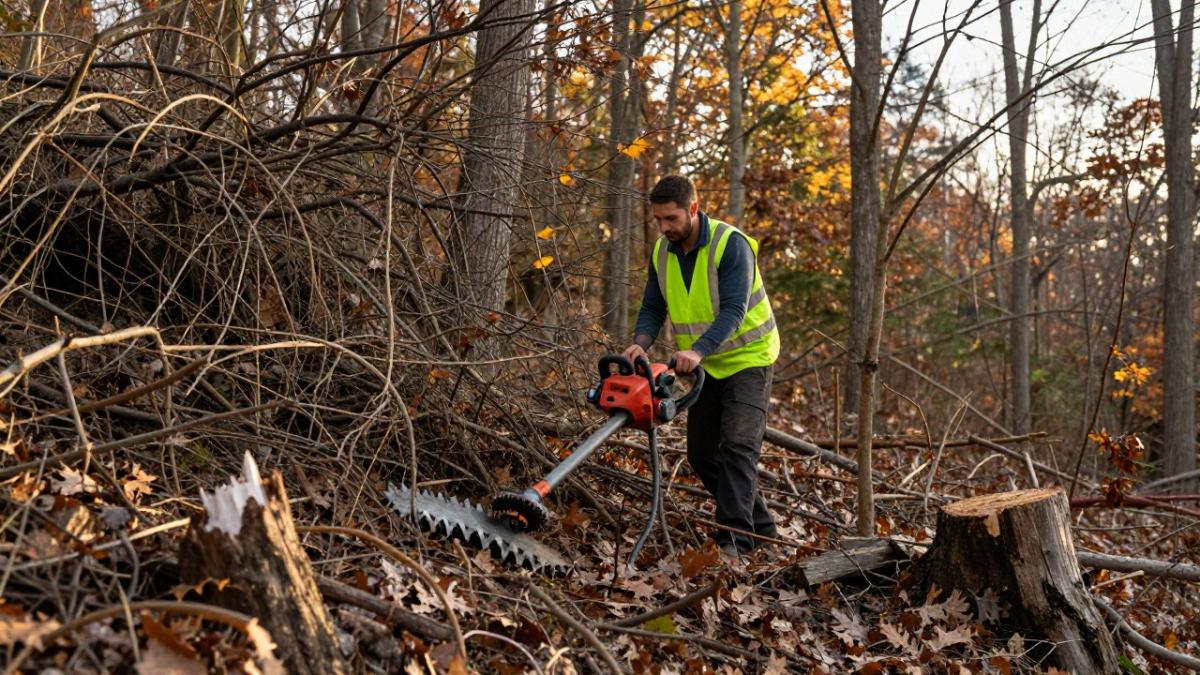
Manual clearing works best on light brush, saplings, and scattered dead trees under about six inches in diameter. It is slower and harder on your back, but it avoids soil compaction and keeps sensitive ground intact.
Chainsaws, Hand Tools, and Safe Felling Basics
A sharp chainsaw, a brush axe, loppers, and a good pole saw handle most small-acreage work. Fell dead trees in their natural lean direction, keep two escape routes clear, and never cut alone. Watch out: a dead tree can drop branches without warning, so inspect the canopy before you put a bar to the trunk.
Clearing Land With a Skid Steer and Mulcher Attachments
A skid steer with a forestry mulcher attachment is one option for dense brush and small dead trees. The machine grinds vegetation into mulch on the spot, leaving no burn piles and no hauling.
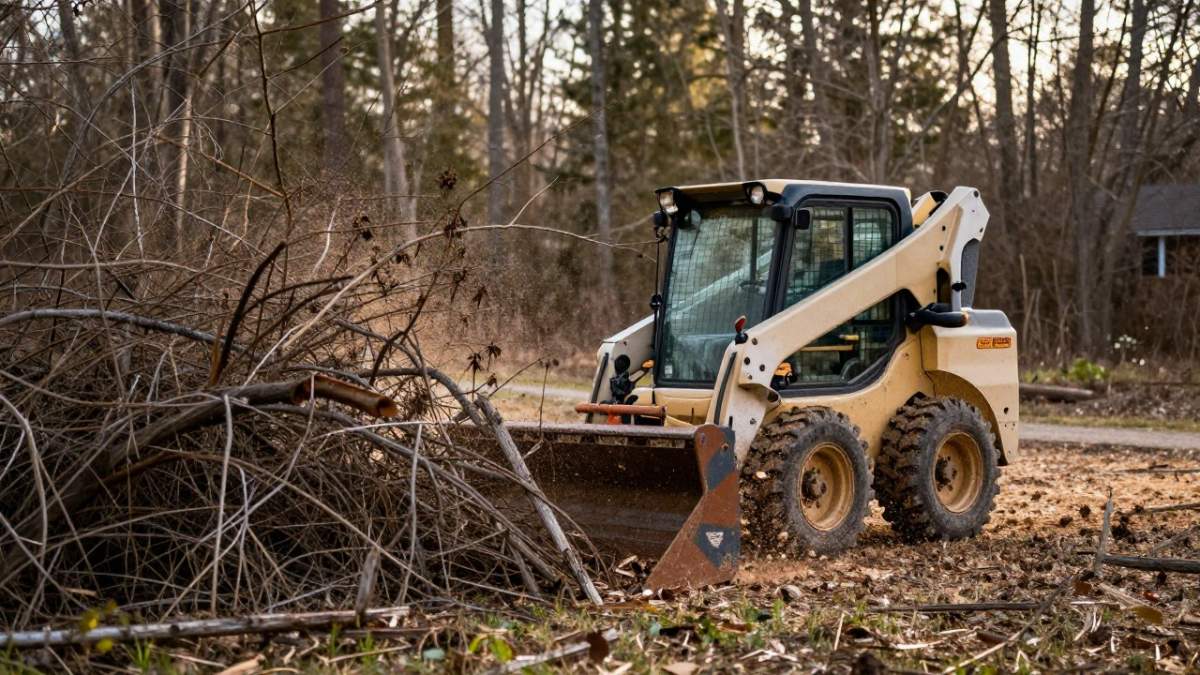
Drum Mulcher vs. Disc Mulcher vs. Front-End Loader
- Drum mulcher: best for heavy brush and small trees; grinds material finer.
- Disc mulcher: faster on lighter growth but throws debris further.
- Front-end loader with a toothbar: best for moving logs and pushing piles, not fine mulching.
A common mistake is renting a mulcher without matching it to the job. Match the attachment to the vegetation, not the other way around.
Handling Stumps and Woody Debris After the Cut
Stumps are where DIY projects stall. For stump grinding and removal in Penn Hills, you can learn more about skilled stump grinding.
Brush and Tree Debris Disposal: Burning, Chipping, or Hauling
Burning is cheapest but depends on weather, permits, and local rules. Chipping turns brush into usable mulch. Hauling is the cleanest option when you want the site cleared fast. If you have cut brush and want it gone, you can learn more about tree debris hauling in Penn Hills.
Land Clearing Cost Per Acre and the DIY vs. Pro Decision
Cost is where most acreage projects go sideways, because the per-acre number quoted online rarely matches the job in front of you. Professional land clearing typically runs $1,397 to $6,173 per acre, with a national average near $3,778, according to Angi's land-clearing cost estimates. That spread is not noise, it tracks four variables you can actually measure before you commit: vegetation density, tree diameter, terrain slope, and how far debris has to travel to a disposal point.
What Drives the Per-Acre Number
- Light brush and saplings under 2 inches: the low end of the range, often $1,400 to $2,000 per acre, because a mulcher or heavy mower covers ground fast.
- Mixed brush with scattered trees 2 to 8 inches: the middle of the range, roughly $2,500 to $4,000 per acre, where a skid steer with a forestry mulcher earns its keep.
- Dense stands with trees over 8 inches and hazard trees: the top of the range and beyond, $5,000 to $6,200+ per acre, because felling, limbing, and hauling dominate the labor.
The DIY Math Most Landowners Skip
DIY saves the labor line but adds rental, fuel, insurance, and your own hours. A common pattern on one acre of mixed brush:
| Line item | DIY rental path | Contractor path |
|---|---|---|
| Equipment | Skid steer + mulcher rental, often $400 to $900 per day depending on attachment and machine size | Included in bid |
| Fuel and transport | $100 to $250 | Included |
| Disposal | Chipping or hauling out of pocket | Hauled away |
| Time on 1 acre | One to three weeks of weekends | One to three days |
| Hazard-tree risk | On you | Insured crew |
Run the rental and fuel lines first. If the total lands within about 30 percent of a contractor bid, the insured crew is usually the better trade, because the bid also buys disposal and liability coverage. You can also get a free quote for your service to compare costs. If the acreage is light brush and you already own a capable machine, DIY can win on cost, but only when the debris has somewhere to go.
A Simple Decision Framework by Acreage
- Under 1 acre, light brush: manual clearing or a walk-behind brush mower is often cheapest; rent a chipper for a weekend and spread the chips on site.
- 1 to 5 acres, mixed brush: price a skid steer with a forestry mulcher against a contractor bid. Mulching in place avoids hauling and burn permits, which is where DIY often closes the gap.
- 5 to 20 acres, dense or hazardous: get two or three contractor bids. At this scale, equipment hours, disposal logistics, and insurance exposure favor a crew, and phased clearing spreads the cost across seasons.
Watch out: a low bid that excludes stump grinding, hauling, or hazard-tree work is not a comparable number, ask each bidder to itemize felling, mulching, stump treatment, and disposal so you compare the same scope.
Protecting Soil, Water, and Wildlife While You Clear
Most clearing guides treat environmental care as a footnote. On acreage, it is the part that decides whether the land is usable next spring or washes into the creek. Heavy equipment compacts soil and can speed erosion on slopes; one landowner in a sustainable land-clearing discussion reported that trackloaders and tractors compacted the soil and made problems worse. The fix is planning, not restraint for its own sake.
Pre-Work Compliance Checklist
Before equipment arrives, confirm each of these with the local code office or state environmental agency:
- Wetlands and streams: many wooded lots carry restrictions on clearing within a buffer of wetlands, streams, or drainage ways. Identify the buffer width before you flag a single tree.
- Protected and heritage trees: some municipalities restrict removing mature or specimen trees, and a permit may be required even on private land.
- Burning rules: open burning of brush usually requires a permit and depends on weather, wind, and seasonal burn bans. Confirm before you build a pile.
A five-minute call to the code office saves a fine later, and it tells you which parts of the acreage are off-limits before you price the job.
Erosion Control That Actually Works
- Leave a vegetated buffer along creeks and drainage ways. Roots hold banks; bare soil does not.
- Keep roots in place on slopes. Grinding stumps flush on a hillside removes the structure holding the soil.
- Direct water, don't dam it. A water bar or shallow diversion on equipment trails moves runoff off the work area instead of pooling.
Wildlife Timing and Habitat
Clearing outside nesting season can help avoid disturbing active nests, and frozen or dry ground compacts less. Leave a few standing dead trees (snags) away from structures and lines; they are habitat, and they cost nothing to keep.
Watch out: a hazard tree that looks stable can drop limbs without warning, and dead trees near water or structures are the ones most likely to fail, have an arborist or insured tree crew assess those stems before anyone puts a saw to them.
Getting a Crew Out to Walk Your Acreage
The safest next step is a walkthrough. For dead and leaning trees, expert tree removal in Penn Hills covers hazardous removals, and you can follow the five steps to get your free tree assessment quote to book a visit.
Clearing acreage safely comes down to knowing what you are cutting before you cut it. If your property has dead, leaning, or storm-damaged trees near a structure, let a licensed crew handle it.
Frequently Asked Questions
How much does it cost to clear an acre of land full of trees?
Professional land clearing costs vary widely by scope, according to third-party cost estimates. Actual pricing depends on tree density, terrain, stump removal, and how debris is handled. Dense hardwood stands on a slope sit at the high end; light brush on flat ground sits at the low end. Get a site walk and a written quote rather than relying on a per-acre rule of thumb.
Can you clear land without heavy equipment?
Yes, on smaller or sensitive parcels. Learning how to clear land without heavy equipment means working with chainsaws, brush cutters, loppers, and a wood chipper, plus a plan for hauling or burning debris. It suits light brush, saplings, and scattered dead trees. It is slow going on an acre or more, and felling larger dead trees near structures or power lines is where DIY turns dangerous. A trackloader or tractor can also compact soil, so hand work has real advantages on wet or erosion-prone ground.
How long does it take to clear an acre with a forestry mulcher?
Work pace with a forestry mulcher on a skid steer depends on brush density, steep ground, and heavy dead timber. Hardwood regrowth and large stumps add time. Terrain and access matter as much as acreage: a fence-line gate and soft ground can slow a machine to a crawl. Ask the operator for a realistic day count for your specific site, not a generic estimate.
How do you dispose of dead trees and brush on acreage?
You have three main options for brush and tree debris disposal: chip it on site and use the mulch, burn it where local rules allow, or haul it off. Chipping keeps nutrients on the property and avoids burn permits. Burning requires checking county and township rules, burn bans, and setback distances from structures. Hauling is the most expensive but the cleanest. Many landowners chip the brush and haul or sell the larger trunk wood.
Is it safe to cut down a dead tree yourself?
Small dead trees away from structures, fences, and power lines can be felled safely by a careful homeowner with the right saw and safety gear. Larger dead trees are a different risk: dead wood is unpredictable, limbs drop without warning, and the hinge behaves differently than on live timber. Any dead tree leaning toward a roof, driveway, or utility line should be assessed by a licensed and insured crew before anyone puts a saw to it.
What should you do with a dead tree near a power line?
Do not cut it yourself. Utility lines carry enough voltage to kill, and contact with a falling limb can energize the tree. Call your utility company first if the tree is touching or close to the lines, then bring in a licensed and insured tree service for the removal. Crews trained on line-clearance work coordinate with the utility and use rigging to control how the wood comes down.


Get Your Free Quote
Join the 500+ homeowners who trust us with their tree services. Contact us to get a free quote for your project.


