 (412) 607-8548

How Deep Do Professional Stump Grinders Go?
Last Updated: November 8, 2026
Quick Summary
Most professional stump grinders go to roughly 4 to 8 inches below ground level, which is enough to cover the spot with topsoil and grow grass or plant something new. Deeper work can reach 8 to 12 inches or more, usually with a larger machine.
- Standard grinding typically reaches about 4 to 8 inches below grade.
- Deep stump grinding can reach 8 to 12 inches or more with a larger machine.
- Machine size sets the maximum depth, so equipment on site matters as much as the target.
- Planting over a stump spot or building a patio requires deeper removal, often 8 to 12 inches.
- Clarify whether a quoted depth is measured from surrounding grade or from the stump top.
Table of Contents
- How Deep Professional Stump Grinders Typically Cut
- Why Machine Size and Model Set the Depth Limit
- Ideal Depth for Stump Grinding by Intended Use
- What Happens to Roots After Stump Grinding
- How Long Stump Grinding Takes and What Changes the Timeline
- Stump Grinding Cost and What the Quote Includes
- Scheduling Your Stump Grinding Job With Hilltop Tree Services
- Frequently Asked Questions
How Deep Professional Stump Grinders Typically Cut
Most professional stump grinders go to roughly 4 to 8 inches below ground level. That depth is enough to clear the stump, cover the spot with topsoil, and grow grass or plant something new. Hilltop Tree Services LLC has provided stump grinding across the Pittsburgh area for more than 15 years.
Depth is not one fixed number, though. Sources disagree on what counts as typical. A 2026 article describes standard work at about 4 to 6 inches, with deeper "deep stump grinding" reaching 8 to 12 inches or more. Another 2026 service page says its standard grind goes 6 to 8 inches below grade. Neither is a national survey, so treat these as service standards rather than industry averages. 2026 stump grinding depth guide
!A professional tree crew member in a hard hat and safety gear operating a stump grinder on a residential lawn
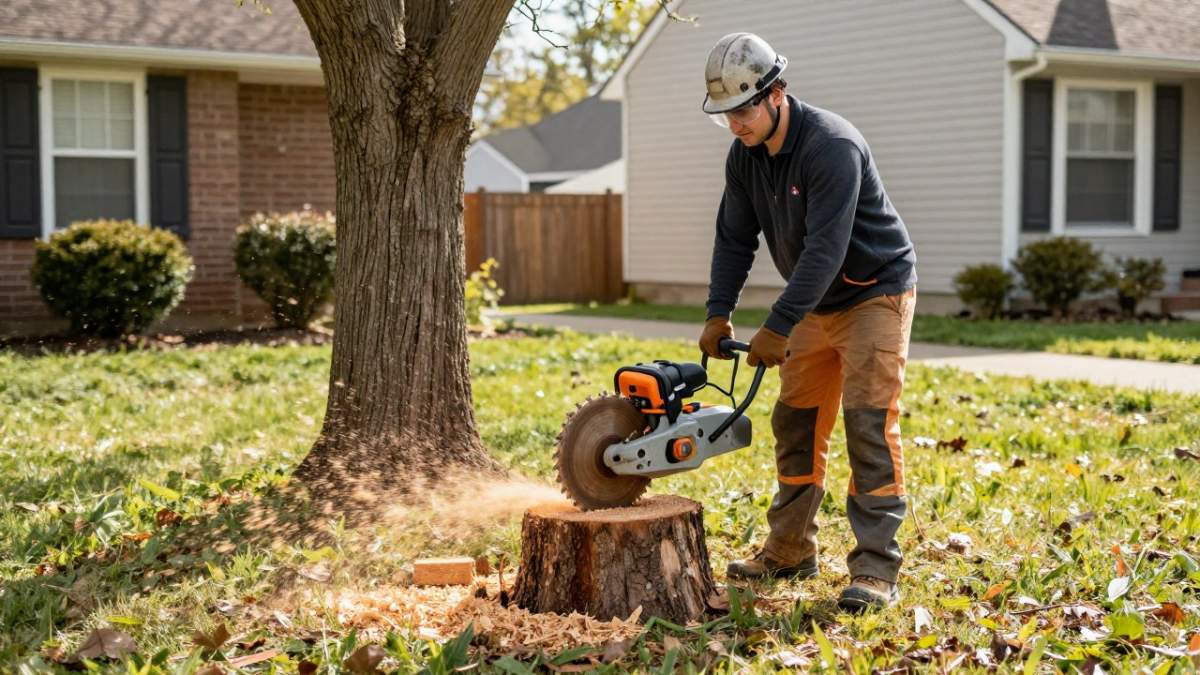
The depth a grinder reaches depends on the stump, the soil and the root system, which all change the result.
- Standard work: about 4 to 8 inches below grade
- Deeper work: 8 to 12 inches, usually with a larger machine
- Roots and soil can limit how far the cutter reaches
Depth varies with the stump, soil and roots, but the article gives these typical ranges.
| Work type | Typical depth below grade | Note |
|---|---|---|
| Standard grind | About 4 to 8 inches | Enough to cover with topsoil and plant |
| Deep stump grinding | 8 to 12 inches or more | Usually needs a larger machine |
| Service page standard | 6 to 8 inches | Stated by one 2026 service page |
| Article standard | 4 to 6 inches | Cited from a 2026 article |
Why Machine Size and Model Set the Depth Limit
The grinder you use sets the ceiling on depth. Manufacturers publish the maximum they can reach, and those numbers vary a lot. One stump-grinder maker lists its machines at 12 to 27 inches, depending on the model. Its SG-75 reaches about 23 to 24 inches, and its largest 3100 model reaches the greatest depth of the line. Stump grinder buying guide 2026
Smaller machines generally suit tight yards and fences, while larger ones need more room to maneuver.
Before a crew picks a machine, they look at:
- Stump diameter and height above ground
- How much access the machine has through gates and side yards
- Whether the root flare is wide or buried deep
Because of this, the best depth for your job depends on the equipment on site, not just the maximum number printed on a brochure.
Ideal Depth for Stump Grinding by Intended Use
Deeper is not always better. Most homeowners only need enough depth to bury the remaining wood under soil. Find skilled below-grade stump grinding in Penn Hills if you want a crew to handle deeper work for you. A forum commenter who works in tree care put it bluntly: shallower grinding is usually the right call, and deep grinding is rarely requested. It is an individual opinion, not a formal study, but it matches what we hear from customers. r/arborists discussion on stump grinding depth
The more useful question is what you plan to put in that spot. Depth targets differ by project, and the numbers below are practical starting points most crews work from, not code requirements. Always confirm the target with your contractor in writing before the machine arrives.
- Lawn or sod: Grind to about 4 to 6 inches below grade, then backfill with topsoil to within an inch of surrounding grade. Sod needs a firm, settled base; too much loose chips under the sod causes dips within a season.
- Garden beds and ground cover: 6 to 8 inches is usually enough. You are burying wood, not building a structure, and deeper cuts add cost without improving planting.
- Replanting a tree in the same spot: Remove the stump and as much of the root flare and major roots as the machine can reach, often 8 to 12 inches. Leftover wood can harbor decay fungi and root-rot organisms that affect the new tree.
- Patio, deck, driveway, or shed footing: Plan for 8 to 12 inches, and sometimes more, so no wood sits inside the zone that will be excavated or compacted. Structural work usually requires removing the stump and major roots entirely rather than grinding in place.
- Fence posts and mailbox posts: 8 to 10 inches along the post line, because an auger or post hole digger will hit any wood left in the path.
- Raised beds and fill areas: 6 inches is often sufficient if you are bringing in 8 or more inches of clean fill, since the wood will be well below the root zone of what you plant.
Match the depth to the next use of the ground, not to the machine's maximum.
What the quoted depth actually measures. This is where jobs go wrong. Ask whether the number is measured from surrounding grade, from the top of the stump, or from the lowest point of the cut. A stump that stood 10 inches tall above the lawn can be "ground 8 inches deep" and still leave wood at grade once the chips settle.
Site conditions that change the plan. Depth is not only a project decision. Buried utilities, irrigation lines, landscape lighting wire, rocks, and nearby foundations all constrain how far a crew should cut. Most states require calling 811 before any digging, and while stump grinding is shallow, a crew should still know where the gas, water, and electric lines run. Slopes, saturated soil, and tight gate access can also force a smaller machine and a shallower realistic depth.
How to specify and verify the job. Put the target depth in the written scope, along with whether chips are hauled away, whether the hole is backfilled with topsoil, and how the finished grade will be left. After the work, check depth with a tape measure at the lowest point of the grind and confirm the surrounding grade was not disturbed. If the number in the quote was measured from the stump top rather than grade, clarify that before signing.
To discuss the depth your project needs, visit get a free quote for your stump grinding job and tell us what you plan to put in that spot.
What Happens to Roots After Stump Grinding
Grinding removes the trunk and the main roots near the surface, but it does not dig out every root. Roots that run deeper or spread wide often stay in the soil. They rot over time, which is why the ground can settle a few months after the job. How much settling you see depends on root mass, soil type, and how the hole is backfilled.
What to do with the grindings. A stump grind produces a pile of chips and soil mixed together. Options are to haul them away, spread them as mulch in beds, or use them as fill in the bottom of the hole. Chips used as the top layer of backfill will rob nitrogen from the soil as they break down, so keep them below the top few inches and finish with clean topsoil.
Backfilling and settling. Fill the hole in lifts of a few inches and water each lift so the soil settles before you add more. Expect the surface to sink an inch or two over the first season as buried roots decay. Plan to top-dress with additional soil after the first rainy season rather than trying to fill the hole perfectly on day one.
Drainage and grade. The finished grade should match the surrounding lawn so water does not pool in the stump hole. If the stump sat on a slope, rebuild the slope rather than leaving a flat pocket. Poor drainage in a stump hole is a common reason new sod fails in the first year.
Timing for lawn and planting. Wait until the backfill has settled before laying sod or seeding, often a few weeks to a full season depending on soil and weather. For planting a new tree, most practitioners recommend waiting at least one season so the buried wood has begun to break down and the soil has stabilized.
Roots that keep sprouting. Some species, including many maples, willows, and poplars, send up shoots from surviving roots after the trunk is gone. Grinding alone does not stop this. If sprouts appear, mow them or treat them according to label directions, and expect the flush to decline over a couple of seasons as the root system starves.
A few things help a lawn recover:
- Fill the hole with clean topsoil, not just wood chips
- Water the area during dry weeks so the new soil settles evenly
- Expect some sinking as the buried roots break down
- Keep chips below the top few inches of backfill
- Recheck grade after the first wet season and top-dress as needed
Protecting the surrounding lawn during the job also matters. Learn how to protect your lawn during stump grinding to avoid ruts and compacted soil.
How Long Stump Grinding Takes and What Changes the Timeline
Job length depends on the stump and the site. Large stumps, multiple stumps, or stumps in hard-to-reach yards generally take longer, and greater depth adds time.
Factors that stretch the timeline include:
- Stump diameter, which is the biggest factor
- Roots spreading into surrounding soil
- Rocks or buried metal in the grinding area
- Access for the machine
Stump Grinding Cost and What the Quote Includes
Costs depend on stump size, depth, access and cleanup. Our quotes depend on the work involved, so the best way to get a number is to ask us. For a general sense of ranges, read our 2026 stump grinding cost guide before you call.
Ask any company to spell out what the quote covers:
- Grinding depth you are paying for
- Whether wood chips are hauled away or left on site
- Backfill with topsoil, if included
- Cleanup of the work area
Scheduling Your Stump Grinding Job With Hilltop Tree Services
Hilltop Tree Services LLC is a family-owned company with a licensed and insured crew. We do the work ourselves rather than handing it to subcontractors, so you deal directly with the people on your property. Tell us the stump size, the depth you need and any access concerns, and we will be glad to discuss a plan.
Ready to get started? Request your free quote to discuss scheduling and the work involved.
Get My Free Quote
Frequently Asked Questions
What is the ideal depth for stump grinding?
The right depth depends on what you plan to do with the ground afterward, so the answer varies by project. The right depth depends on what you plan to do with the ground afterward, so tell your crew the intended use before the work starts.
What happens to roots after stump grinding?
Grinding removes the visible stump and the wood just below grade, but many roots remain in the soil. Those roots decay over time, which can cause some settling in the area. Surface roots that extend beyond the stump are usually not removed unless the job specifically includes them, so ask whether root removal is part of your quote.
How long does stump grinding take?
Larger stumps, multiple stumps, or difficult site access can extend the job. Access to the stump, the amount of cleanup required, and the machine size all affect the timeline. Your crew can give a more specific estimate after inspecting the site.
How much does stump grinding cost?
Pricing depends on stump diameter, number of stumps, site access, and cleanup requirements, so there is no single flat rate. For current pricing on your property, request a quote from Hilltop Tree Services LLC through the website. Get a written estimate that states the grinding depth and whether wood chip cleanup is included.


Get Your Free Quote
Join the 500+ homeowners who trust us with their tree services. Contact us to get a free quote for your project.


