 (412) 607-8548

Tree Removal Cost in Pittsburgh PA: A Homeowner's Pricing Guide
Last Updated: October 26, 2026
Quick Summary
Tree removal cost in Pittsburgh PA ranges from under $150 to over $450 for small trees, $150 to $850 or more for medium trees 30 to 60 feet tall, and $400 to $2,000+ for large or complex removals. Your actual quote depends on tree size, condition, proximity to structures, and access. Stump grinding and hauling are usually priced separately.
- Trunk diameter matters as much as height, since a short, thick tree can weigh more and take longer to cut.
- Stump grinding is almost always a separate line item, with 8 to 12 inches below grade typical.
- Ask directly whether hauling is included and where the wood goes before you sign.
- Trees in the public right-of-way are generally the municipality's responsibility, not the homeowner's.
- Ask for a certificate of insurance and call the insurer to confirm the policy is active.
Table of Contents
- What Tree Removal Costs in Pittsburgh PA
- Pittsburgh Tree Removal Estimates and Price Ranges
- Tree Removal Cost Factors That Move the Quote
- Tree Stump Grinding Cost and What It Adds
- Tree Removal and Cleanup: What a Written Quote Should Include
- Permits, Protected Trees, and Contractor Checks in Pittsburgh
- Comparing Tree Removal Estimates Before You Sign
- Get a Free Tree Removal Quote from Hilltop Tree Services
- Frequently Asked Questions
What Tree Removal Costs in Pittsburgh PA
Tree removal cost Pittsburgh PA homeowners face depends heavily on the tree in front of them, not on a single number pulled from a national average. A Pittsburgh-specific listing puts small-tree removal under $150 to over $450, while medium trees 30 to 60 feet tall can run $150 to $850 or more, according to Thumbtack's tree trimming pricing data. Statewide guides push the ceiling higher: a Pennsylvania cost guide reports common quotes of $400 to $2,000, with complex jobs above $10,000. At Hilltop Tree Services LLC, we quote the tree, the access, and the cleanup, because those three things decide the real price. Below, we break down what moves a removal estimate and how to read one before you sign.
EXTERNAL_LINK: Expert tree removal in Penn Hills covers the actual service behind these numbers.
Pittsburgh Tree Removal Estimates and Price Ranges
Estimates for tree removal in Pittsburgh cluster into three bands that track tree height and job complexity. A small tree under 30 feet is the cheapest removal, a medium tree between 30 and 60 feet lands in the middle, and a large or hazardous tree pushes toward the top of the range. Published figures vary widely because they describe different locations and job conditions, so treat any broad range as a starting point, not a quote.
| Tree Size | Typical Height | Cost Range | What Drives the Price |
|---|---|---|---|
| Small tree | Under 30 feet | Under $150 to over $450 | Simple access, low risk |
| Medium tree | 30 to 60 feet | $150 to $850 or more | Height, rigging, nearby structures |
| Large or complex | Over 60 feet | $400 to $2,000+ | Hazard, equipment, tight access |
Tree Removal Cost Factors That Move the Quote
Four factors separate a straightforward removal from an expensive one: tree size and height, tree condition, proximity to structures, and access. A dead or diseased tree adds risk, because limbs can fail without warning and the crew has less control over how the wood comes down. A tree leaning over a roof or power line requires rigging and slower, more careful work. Tight access between a house and a fence rules out heavy equipment, which means more manual labor and more time.
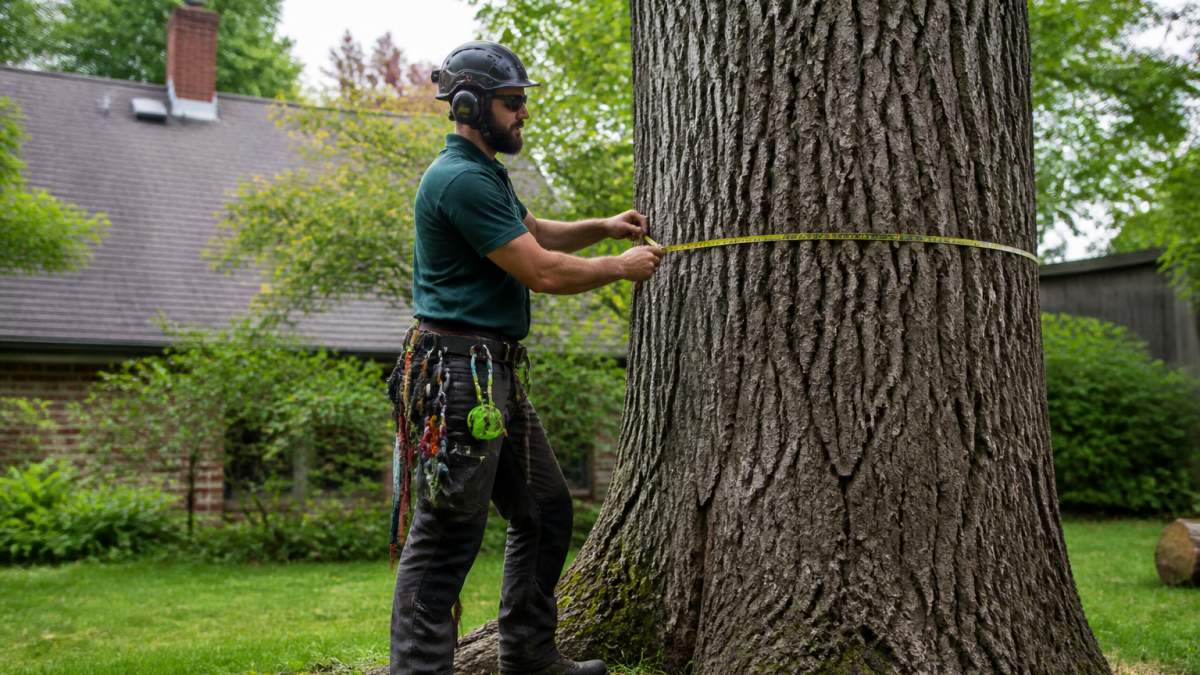
Trunk diameter matters as much as height. A short, thick tree can weigh more and take longer to cut than a tall, slender one, so the removal estimate should reflect both dimensions, not just how tall the tree looks.
Tree Stump Grinding Cost and What It Adds
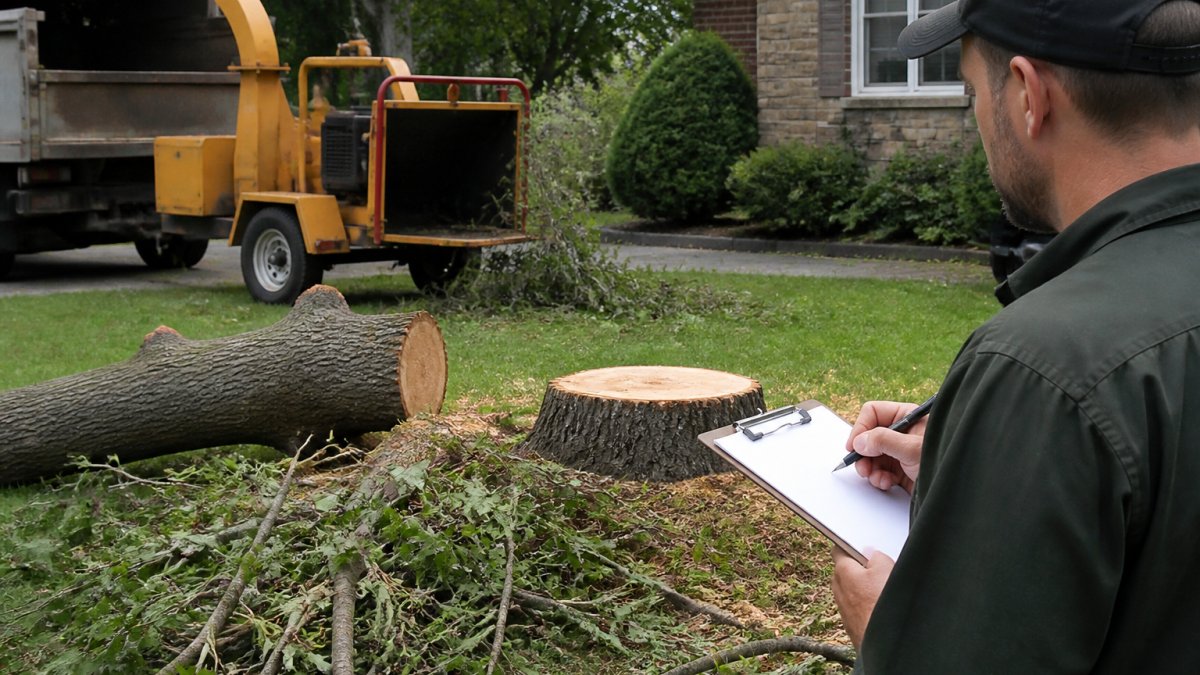
Stump grinding is usually a separate line item, not part of the base removal price. The stump left behind after a tree comes down is an eyesore and a trip hazard, and grinding it out finishes the job. Grinding depth and stump diameter decide the price, and a large stump with exposed surface roots costs more than a small, flush-cut one. Stump grinding cost breaks down what standard and large jobs run. Ask how deep the grinder goes before you agree, because a shallow pass leaves roots behind.
Tree Removal and Cleanup: What a Written Quote Should Include
Most competitors stop at "get a free estimate." The useful question is what that estimate actually itemizes. A written quote for tree removal should break the job into five priced lines, and a bid that collapses them into one lump sum is the one most likely to grow after the crew arrives.
1. The removal itself. This line should state the tree's height and trunk diameter, the crew size, and the equipment called for (bucket truck, crane, or climbing and rigging).
2. Rigging and controlled lowering. Trees near a roof, fence, power drop, or driveway usually require rigging, ropes and pulleys that lower limbs in controlled pieces rather than dropping them. Rigging is slower and more labor-intensive, so it should appear as its own line or be explicitly noted as included.
3. Cleanup. Cleanup means the crew rakes branches, twigs, and sawdust from the lawn, driveway, and gutters, and blows off hard surfaces before leaving. Confirm whether cleanup covers the whole yard or only the immediate drop zone.
4. Hauling and disposal. Hauling means the wood and brush leave your property. This is where cheap quotes hide costs: a bid that stacks logs at the curb shifts disposal to you, and a dumpster or a separate haul-away charge can add a few hundred dollars.
5. Stump grinding. Stump grinding is almost always a separate line item. Confirm the grinding depth (8 to 12 inches below grade is typical) and whether the grindings are hauled away or left as fill. A shallow pass leaves roots that can resprout.
Fixed fee versus hourly. Most residential removals are quoted as a fixed fee for the described scope. Hourly pricing shifts the risk of a slow job onto you, so if a bid is hourly, ask for a not-to-exceed cap. Also confirm the quote's expiration date, many are good for 30 days, and whether it assumes the tree is still standing and accessible on the day of work.
A quick way to compare bids is to lay them side by side against the same five lines. Two quotes that differ by hundreds of dollars often differ because one includes hauling and stump grinding and the other does not. Five steps to request a free tree assessment explains what information to gather so your estimates are comparable.
Permits, Protected Trees, and Contractor Checks in Pittsburgh
This is the part of the job most cost guides skip, and it is where a cheap bid can turn expensive. Two separate questions matter: whether the tree is regulated, and whether the contractor is covered if something goes wrong.
Street trees and the right-of-way. Trees planted between the curb and the sidewalk, in the public right-of-way, are generally the municipality's responsibility, not the homeowner's. The city's Forestry Division handles permits and work on public trees, and a crew should not cut a right-of-way tree without confirming who authorized the work. Before any crew touches a tree near a sidewalk, curb, or street, call the city's forestry office and ask two questions: Is this tree in the right-of-way? And does removing it require a permit? Get the answer in writing or note the name of the person you spoke with.
Private trees and protected species. Rules for trees on private property vary by municipality and by neighborhood, and some communities regulate the removal of large or heritage trees even on private lots. A practical step is to call your borough or the city's permit office before scheduling removal of a large tree and ask whether a permit or replacement planting is required. If the tree is on a property line, confirm ownership before work begins, a tree straddling the line may need a neighbor's consent.
Contractor licensing and insurance. For private trees, the bigger check is the contractor. Ask for three documents before work starts:
- A certificate of insurance showing general liability coverage, with the insurance company's name and policy limits. Call the insurer to confirm the policy is active, a certificate can be forged or expired.
- Workers' compensation coverage or proof the crew is covered. If an uninsured worker is injured on your property, the claim can come back to you.
- State registration or licensing, where required for tree work, and a business address you can verify.
Safety practices to look for. A legitimate crew wears hard hats, eye protection, and chainsaw chaps, and uses ropes and rigging rather than dropping limbs free near structures. Ask whether the company carries a certified arborist on staff or consults one for hazardous trees, certification through the International Society of Arboriculture is a commonly recognized credential. How to hire a licensed, insured tree service walks through the verification questions to ask.
Comparing Tree Removal Estimates Before You Sign
Comparing estimates means comparing scope, not just the bottom line. Two quotes can differ by hundreds of dollars and still not cover the same work. Line up each bid against the same four items: removal, cleanup, hauling, and stump grinding. Ask whether the price is a fixed fee or an hourly rate that can climb. Confirm the crew is insured and that no subcontractors will show up instead of the company you hired.
- Removal scope matches the tree you described
- Cleanup and hauling included
- Stump grinding included or priced separately
- Fixed fee versus hourly rate confirmed
- License and insurance proof provided
Five steps to request a free tree assessment explains what information to gather so your estimates are comparable.
Get a Free Tree Removal Quote from Hilltop Tree Services
The gap between a low bid and a safe removal usually comes down to who shows up and what they carry. Hilltop Tree Services LLC is family-owned, licensed, and insured, with more than 15 years of experience and 500+ customers served. We use no subcontractors, so the crew that quotes your job is the crew that does it, and we clean the site before we leave. Get started with Hilltop Tree Services LLC and request a free quote for removal, trimming, stump grinding, or storm cleanup in Penn Hills and the surrounding area.
Frequently Asked Questions
How much does it cost to remove a 30-foot tree?
A 30-foot tree falls into the medium size range. The final tree removal cost depends on trunk diameter, how close the tree sits to a roof or power line, and whether stump grinding is included. Get a written, itemized estimate for your specific tree rather than relying on a height-based average.
What factors affect the cost of tree removal?
The main tree removal cost factors are tree size and height, trunk diameter, condition (dead, diseased, or leaning trees cost more), and access. A tree in an open yard is cheaper to remove than one boxed in by a fence, shed, or power line. Other factors include the equipment needed, permit requirements, stump grinding, debris hauling, and whether the job is an emergency storm call.
Does tree removal cost include stump grinding and debris cleanup?
Not always. Many quotes cover cutting the tree down, chipping the branches, and hauling away the debris, but leave the stump in the ground. Tree stump grinding cost is often a separate line item. Ask for a written quote that lists cleanup, hauling, wood disposal, and stump grinding separately so you can see exactly what you are paying for and compare bids fairly.
How can I compare tree removal estimates?
Ask each company for a written, itemized estimate that breaks out labor, equipment, cleanup, hauling, stump grinding, and any permit fees. Confirm the company is licensed and insured and ask for proof. Compare what is included, not just the bottom line. A lower bid that excludes stump grinding or debris removal can end up costing more once those items are added back in.
When should a tree be removed by a professional?
Call a professional when a tree is dead, diseased, leaning, storm-damaged, or growing close enough to threaten a roof, power line, or nearby structure. Trees affected by pests such as the emerald ash borer also need assessment. Large or hazardous removals involve rigging and special equipment, and attempting them yourself risks injury and property damage.


Get Your Free Quote
Join the 500+ homeowners who trust us with their tree services. Contact us to get a free quote for your project.


