 (412) 607-8548

Emergency Storm Damaged Tree Removal: What to Do First
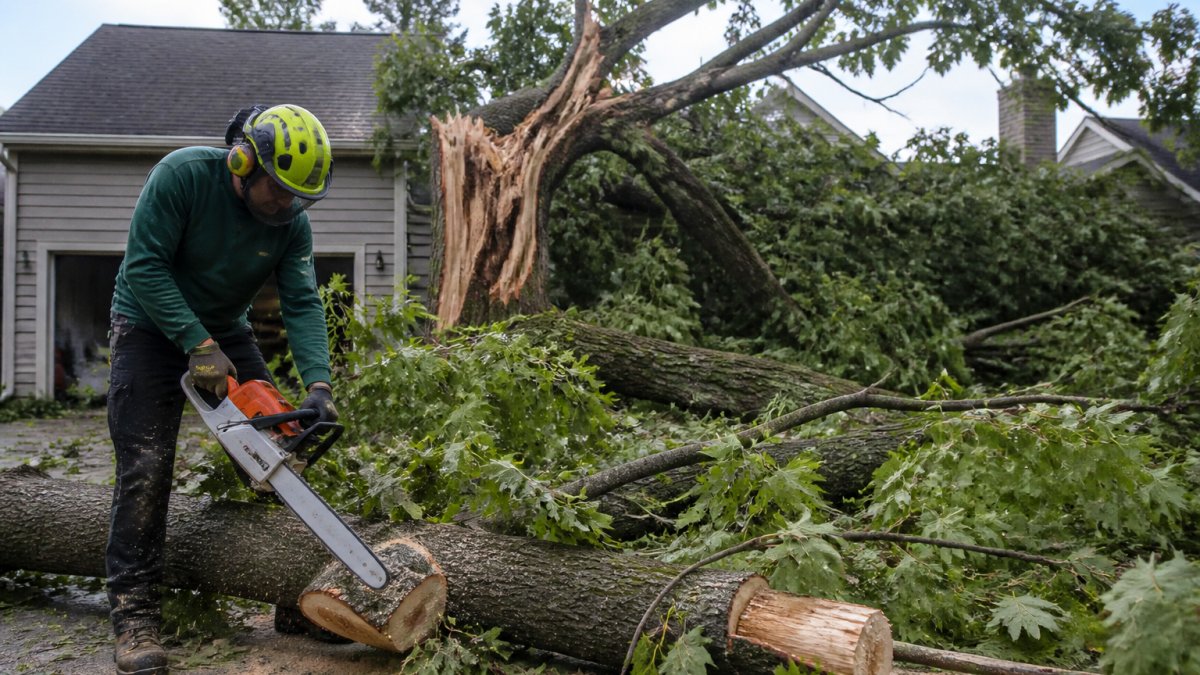
Last Updated: October 30, 2026
Quick Summary
Emergency storm damaged tree removal starts with staying back, not moving forward. Count heads, get everyone inside and away from the drip line, then check for downed utility lines, gas smells, and trees resting on structures before anyone goes outside. If any hazard is present, call 911 or your utility company first.
- The first hour after a storm is when most injuries happen, usually from walking outside to look.
- Assess a storm-damaged tree from a safe distance using four checks: root plate, trunk, canopy, and ground.
- A tree touching power lines is an electrical hazard, not a tree problem, and no homeowner should handle it.
- DIY fallen tree removal is only safe when the tree is small, fully on the ground, clear of structures, and free of tension.
- Document everything with photos and video before a single branch is cut for your insurance claim.
Table of Contents
- Your First 60 Minutes After Storm Damage Hits
- How to Assess a Leaning or Storm-Damaged Tree
- Tree Touching Power Lines After a Storm: Never Touch It
- Tree on House After Storm: Protect the Structure and Your Claim
- Fallen Tree Removal After Storm: When You Can and Cannot DIY
- Insurance, Costs, and Permits for Storm Tree Removal
- Schedule a Storm Damage Assessment With Hilltop Tree Services
- Frequently Asked Questions
Your First 60 Minutes After Storm Damage Hits
The first hour after a storm is when most injuries happen, usually because someone walked outside to "just take a look." Emergency storm damaged tree removal starts with staying back, not moving forward.
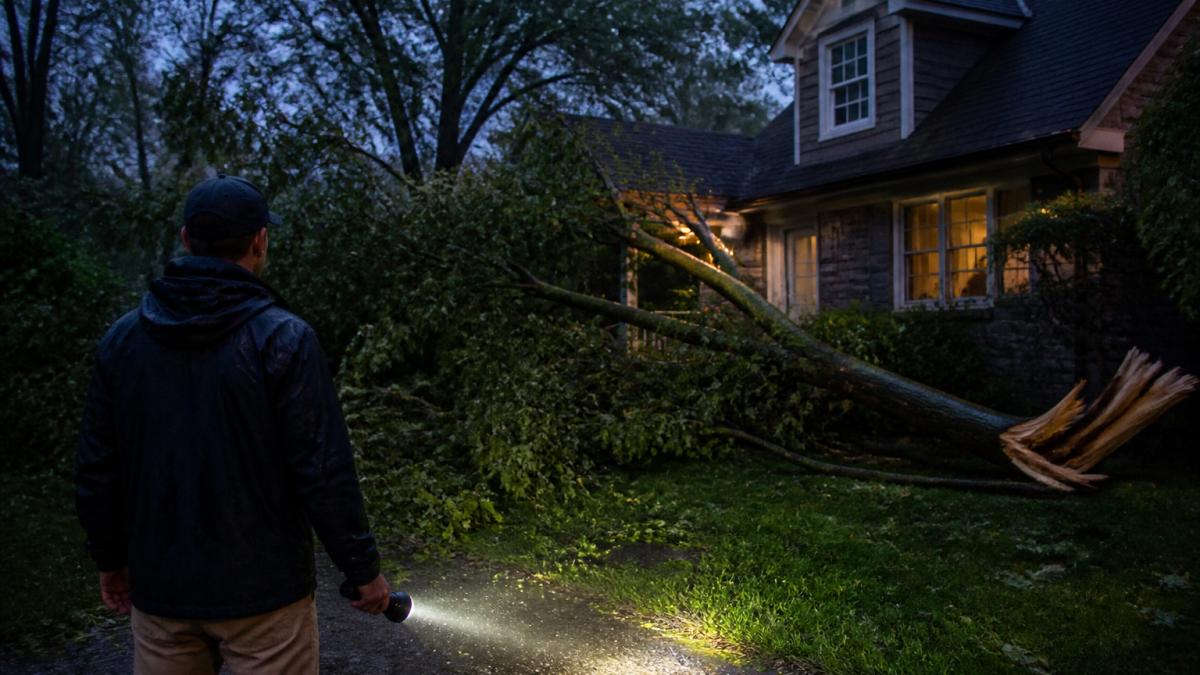
Make Sure Everyone Is Safe Before You Look at the Damage
Count heads first. Get everyone, including pets, inside or well away from the drip line of every tree on the property. Then check for these before anything else:
- Downed or sagging utility lines anywhere on the property
- The smell of gas, or a hissing sound near a damaged meter
- Cracks in the roof, ceiling, or foundation walls
If any of those are present, call 911 or your utility company before anyone else. A leaning tree or hanging branch can finish falling hours after the storm passes, and saturated ground makes that far more likely. Stay off the lawn until you've done a visual scan from a doorway or window.
How to Assess a Leaning or Storm-Damaged Tree
You can assess a storm-damaged tree from a safe distance using four visual checks: the root plate, the trunk, the canopy, and the ground beneath it. None of these require you to walk under the tree.
Start at the base. Look for a lifted root plate, a mound of soil pushed up on one side, or a visible gap where the roots meet the ground.
Hazard Signs That Mean Step Back
Some damage is obvious. Some isn't. These are the signals that should end your inspection immediately:
- A visible lean that wasn't there before the storm. New lean means active failure.
- Soil heaving or a cracked root zone. The root plate is already moving.
- Splits or shear cracks in the trunk. The tree can fail without warning.
A common mistake is judging a tree by how it looks from the front door. Trees fail from the roots up, and the root plate is the part you can't see from a window. If you're unsure, call an arborist for a proper tree assessment rather than guess.
Tree Touching Power Lines After a Storm: Never Touch It
A tree touching power lines after a storm is an electrical hazard, not a tree problem, and no homeowner should ever handle it. Downed wires can energize the ground around them.
Only after the utility has de-energized or cleared the line should tree work begin. For a full walkthrough of how to safely remove trees near power lines, including who to call and why a qualified pro handles the work, read our guide.
Tree on House After Storm: Protect the Structure and Your Claim
A tree on house after storm damage is a two-part problem: the structure and the insurance claim. Do not try to move the tree yourself. Instead, document everything before a single branch is cut.
Then take only the steps that prevent further damage, like tarping an exposed area if it's safe to reach. Keep every receipt for materials. Many policies cover emergency measures that prevent additional damage.
Fallen Tree Removal After Storm: When You Can and Cannot DIY
Fallen tree removal after a storm is DIY-safe only in a narrow set of conditions: the tree is small, fully on the ground, clear of structures, fences, vehicles, and utility lines, and not under any tension. If all of that is true, limb removal with hand tools is reasonable for a confident homeowner.
A Decision Path for the First Look
Use this sequence before you touch anything. Stop at the first "no" and call a professional.
- Is anyone hurt or is there a gas smell, sparking, or water intrusion near the electrical panel? If yes, call 911 or the utility first. Do not enter the area.
- Is the tree on a structure, vehicle, fence, or blocking the only access to the property? If yes, treat it as an emergency removal and call a crew. Do not cut to "relieve" the structure yourself.
- Is any part of the tree touching or near a utility line? If yes, stop. The utility owns the line and the clearance work.
- Is the root plate lifted, or is the trunk split or cracked? If yes, the tree can still move. Keep back and get an assessment.
- Is the tree fully on the ground, small enough to handle with hand tools, and free of tension? Only then is DIY limb removal reasonable.
If you are unsure at any step, that is the answer: call a professional. The cost of an assessment is small compared with the cost of a bad cut.
The Tension Problem: Why Pinned Limbs Injure People
A tree under tension stores energy. When a limb is pinned under another limb or bent against the ground, the wood is loaded like a spring.
A professional crew reads tension before cutting: they identify the compression and tension sides, use controlled rigging to lower sections, and keep bystanders outside the drop zone. That is a skill built from repetition, not from a video.
What a Professional Emergency Response Looks Like
When you call a reputable crew, the process is usually predictable:
- Phone triage. They ask what the tree is on, whether anyone is hurt, and whether utilities are involved. This determines whether they dispatch immediately or refer you to the utility first.
- Site assessment on arrival. The crew lead walks the property, identifies hazards, and confirms the scope with you before equipment is unloaded.
- Hazard control. They set a drop zone, move people and pets back, and stabilize or rig the tree before any cutting.
In every other case beyond the narrow DIY conditions, hire a professional tree service: any tree resting on a structure, any tree with a root plate still attached, any tree near power lines, and any tree large enough that a wrong cut could send it the wrong way.
Work through these checks in order and stop at the first "no" to call a professional.
| Check | If yes | If no |
|---|---|---|
| Anyone hurt, gas smell, sparking, or water near electrical panel? | Call 911 or utility first; do not enter | Go to next check |
| Tree on structure, vehicle, fence, or blocking only access? | Treat as emergency removal and call a crew | Go to next check |
| Any part touching or near a utility line? | Stop; utility owns the line and clearance work | Go to next check |
| Root plate lifted, or trunk split or cracked? | Tree can still move; keep back and get assessment | Go to next check |
| Fully on ground, small enough for hand tools, free of tension? | DIY limb removal is reasonable | Call a professional |
Insurance, Costs, and Permits for Storm Tree Removal
Coverage for tree removal varies by policy, so read your declarations page and confirm with your agent before you assume.
Document Before You Cut: A Claim-Ready Checklist
Insurance adjusters work from evidence, and that evidence disappears once cutting begins. Before any saw touches the tree, build a file:
- Wide shots first. Photograph the tree in relation to the house, driveway, fence, and any vehicle, including at least one shot from each side of the property line.
- Close-ups second. Capture the point of impact, cracked shingles or siding, bent gutters, and any water staining on ceilings or walls.
- Video walkthrough. A slow 60-second pan with narration (date, time, what you see) is often more useful than a dozen stills.
What Drives an Emergency Removal Estimate
No honest contractor quotes a firm price over the phone for storm work. Estimates depend on site conditions. These are common factors that affect the number:
- Size and species of the tree, including trunk diameter and height
- Access for equipment, including tight spaces between houses, fences, and retaining walls
- Proximity to the house, power lines, or a neighbor's property
Storm work can cost more than routine maintenance, depending on conditions and crew availability. Get the estimate in writing with the scope spelled out: what is removed, what is hauled, whether the stump is ground, and whether the price includes cleanup of the lawn and driveway.
Permits and Who Is Responsible
Permit requirements vary by municipality, especially for street trees and trees in the public right-of-way. Ask the crew who pulls the permit before work starts, and get the permit number in writing. Responsibility can also depend on where the tree was rooted: a tree that stood on a neighbor's property but fell onto yours is a boundary and liability question, not a tree-removal question, and your insurer and possibly an attorney should be involved before you authorize cleanup that touches the neighbor's side of the line.
For realistic pricing context so you can compare bids with confidence, see our guide to tree removal cost in Pittsburgh PA. And before you sign anything, verify the crew with our walkthrough on hiring a licensed insured tree service in Pittsburgh, including what proof to ask for and what happens if something goes wrong.
Schedule a Storm Damage Assessment With Hilltop Tree Services
The safest next step after storm damage is a professional assessment. Hilltop Tree Services LLC is family-owned, licensed and insured, and has served more than 500 customers across the Pittsburgh area. We do not use subcontractors, and you can communicate directly with the crew performing the work.
We handle emergency removal of storm-damaged and leaning trees, precise pruning to protect roofs and power lines, and stump grinding, with thorough cleanup when the work is done. If you need help now, request reliable emergency tree service in Penn Hills and the surrounding areas. Our guide on the 5 steps to get your free tree assessment quote explains what information to gather and what to expect on-site.
Get started with Hilltop Tree Services LLC and get the tree down safely, the damage documented, and your property back to normal.
Frequently Asked Questions
When is a storm-damaged tree an emergency that needs same-day removal?
A storm-damaged tree is an emergency when it is touching or within reach of power lines, leaning over a house, driveway, or play area, or has a split trunk or hanging limb that could fall without warning. Any tree with a fresh crack at the base, exposed roots lifting from the soil, or a trunk that has shifted position should be treated as urgent. If the tree is near utility lines, call your utility company first, then a licensed tree service for removal.
Does homeowners insurance cover storm-damaged tree removal?
Most homeowners policies cover removal when the tree hits a covered structure, like your house, garage, or fence. Coverage for removal of a tree that fell in the open yard varies by policy. Document the damage with photos before cleanup, keep every receipt, and call your insurer before authorizing work. Ask whether the removal is covered and what your deductible is so you know what you will pay out of pocket.
What should I do if a tree is touching power lines after a storm?
Stay well away and keep everyone else back. Do not touch the tree, the line, or anything in contact with them, and never try to move a limb off a wire. Call your utility company immediately to report the hazard, then call a licensed tree service once the utility has cleared the line. A tree touching power lines after a storm is an electrical hazard, not a pruning job, and only trained crews with the right protective gear should touch it.
How do I know if a storm-damaged tree is likely to fall?
Look for a lean that was not there before, soil heaving or cracks around the base, a split or hollow trunk, and large dead limbs hanging over a target. Fresh bark damage and broken roots on the windward side are strong warning signs. If the tree is within falling distance of your house, car, or power lines, treat it as unstable and keep people and pets away until a certified arborist or licensed tree service assesses it.
Storm damage doesn't wait, and neither should your plan. If a tree is leaning, hanging, or already down, get a professional set of eyes on it before the next rain softens the ground further. Hilltop Tree Services LLC brings over 15 years of experience, a licensed and insured crew, and direct communication from quote to cleanup. Get my free quote and protect your home before the next storm.


Get Your Free Quote
Join the 500+ homeowners who trust us with their tree services. Contact us to get a free quote for your project.


